Tokyo to Kyoto
Shinkansen vs Bus vs Flight for First-Time Visitors
Introduction
Tokyo and Kyoto are linked by domestic flights. overnight buses, and high-speed rail, but the cheapest ticket is not always the best travel decision. The correct choice depends on more than the advertised transit time. The value of your limited sightseeing time, arrival schedule, sleep quality, luggage, and hotel location can all change the answer.
For majority, the Shinkansen is the most reliable method to travel from Tokyo to Kyoto and it takes roughly 130 minutes between 2 stations, operates frequently and prevents the extra airport transfer required when flying. The overnight bus can save money and potentially substitute one hotel night, but only if you can sleep soundly while travelling.
Flying is usually the least efficient option for a central Tokyo-to-central Kyoto journey as Kyoto does not have its own commercial airport. Travellers must fly from Tokyo (Narita or Haneda) into Osaka’s airports – either Kansai International Airport (KIX) or Itami Airport (ITM) – and then you can catch a bus or train up to Kyoto.
Tokyo to Kyoto Transport Comparison
The table below provides the starting and finishing points by using a central Tokyo accommodation and a Kyoto accommodation. These door-to-door times are realistic planning estimates rather than optimal operator schedules as hotel check-in buffers, platform navigation, and local city transfers vary.
| Option | Realistic Door-to-Door Time | Planning Cost | Best For | Main Compromise |
|---|---|---|---|---|
| Nozomi Shinkansen | 3 – 4 hours | Roughly ¥14,000 to ¥15,500 | Most first-time visitors | Higher ticket cost |
| Hikari Shinkansen | 3.5 – 4.5 hours | Similar standard fare; may be covered by JR Pass | JR Pass users | Extra stops and fewer departures |
| Overnight bus | 9 – 10.5 hours | Roughly ¥5,980 to ¥10,500 | Good sleepers and tight budget | Early arrival and poorer rest |
| Domestic flight | Usually 5 – 7 hours | Highly variable | Airline miles or airport connections | Baggage rules and airport transfers |
Note: The Shinkansen’s 130-minute journey time exclude final hotel transfers, boarding local urban trains, or navigating massive terminal stations. Despite these buffers, the rail remains less exhausting and significantly quicker than driving or flying.
Why the Shinkansen Is Usually the Best Choice
The biggest benefit of the Shinkansen is not just velocity but also the decrease of travel friction. Tokyo and Shinagawa stations are situated within the city, while Kyoto Station is a major transport hub linked to subway, taxis, buses, and the local trains. You can reach at the station, board your train and continue directly to Kyoto without extra airport-to-city journey, checked-baggage collection, or airport security.
Besides, the delays are also generally uncommon, luggage stays accessible, comfortable seats, and trains run frequently. For travellers who carrying normal suitcase, the journey is significantly smoother than accomplishing multiple airport transfers. According to official JR Central operational data, the direct trips from Tokyo estimate at roughly 130 minutes but your exact travel time relies on whether you depart from Shinagawa or Tokyo and the train services selected.
Nozomi, Hikari or Kodama: Which Train Should You Choose?
The Tokaido Shinkansen line operates three different service levels on the same railway line but stop at different numbers of stations.
- Nozomi (The Express Choice): This is the most frequent and fastest service that allowing the journey to be just within 130 minutes. If you are buying individual tickets, the Nozomi is the best option as it saves 30-60 minutes for the trip and specifically valuable for a tight 7-10 days Japan Itinerary.
- Hikari (The JR Pass Alternative): It takes approximately 170 minutes and stops at more intermediate stations. Its main value lies in its inclusion in the standard JR Pass. It can be the better-value option for travellers who already have a valid pass and do not mind a slightly longer trip.
- Kodama: It stops at every single station along the route and stretching the travel time to roughly 240 minutes. Sometimes it bundled with local discount programs like the Platt Kodama economy vouchers, but it is not the best recommendation for first-time travellers who going directly from Tokyo to Kyoto.
Should You Depart From Tokyo or Shinagawa Station?
Selecting your departure point should not merely refer to a generic map, but rather on your luggage situation and particular Tokyo accommodation. Both stations serve the same Tokaido Shinkansen trains, but they provide different terminal experiences:
- Tokyo Station: It is the best departure point if your hotel is located in Asakusa, Nihombashi, Marunouchi, and Ginza, or anywhere on the eastern side of central Tokyo. As it is the beginning station for many services, you may have more time to locate your carriage, board orderly, and store your bags.
- Shinagawa Station: This hub is highly recommended if you are staying in Roppongi, Shinjuku, Shibuya, or Shinagawa itself. It is smaller than the massive Tokyo Station complex and also make the navigation of the walkways much more easier.
If you have not chosen your accommodation, this detailed guide explains how different bases affect city travel, airport access, and your journey to Kyoto.
How Much Does the Tokyo-to-Kyoto Shinkansen Cost?
For planning purposes, it is recommended to have roughly ¥14,000 – ¥15,500 for a one way trip for an Ordinary Car seat. The actual fare depends on the travel date, booking item, seat type, and train, hence verify the live price before concluding your budget.
JR Central’s website offer the sale of tickets for the Tokaido Shinkansen and may provide advance-purchase items on eligible trains. These discounts have exclusion dates, limited availability, and restrictions, so they should be regarded as a possible saving rather than a promised fare.
If you’re travelling during a peak period, reserve based on the departure time and route you need instead of waiting indefinitely for a discount. Saving a small amount will not be beneficial if the departure disrupts your Kyoto check-in or require an awkward early start.
Use this article for a wider estimation on the cost of attractions, local transport, meals, and hotels.
Is the JR Pass Worth It for Tokyo to Kyoto?
A national JR Pass is not worth the purchasing for just one Tokyo-to-Kyoto journey. As of August 2026, the official price for a 7-day ordinary pass is ¥50,000 which is more expensive than a single Shinkansen ticket. Prices can also different in different purchase platforms, so it is best to refer their website before making a decision.
The ordinary JR pass covers Kodama and Hikari services on this route but it does not include Nozomi which means you have to purchase additional special ticket and currently listed at ¥4,960 for a trip between Tokyo and Kyoto.
In short, a pass should be decided according to your complete sequence of long-distance trips, not just the one popular Shinkansen ride. This article about JR Pass explains how to compare the pass with individual tickets in detail.
Which Side Should You Sit on to See Mount Fuji?
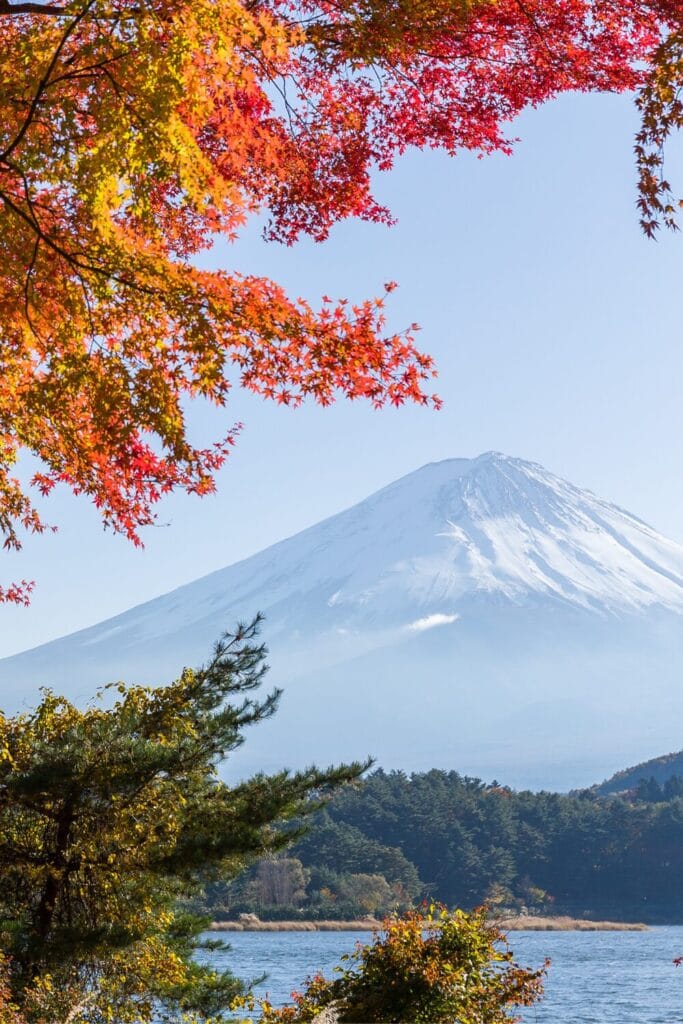
When travelling from Tokyo to Kyoto, Mount Fuji is normally visible from the right-hand side of the train. Seat E (or Seat D in Green Cars) on the right-hand side of the train offers the best view of Mount Fuji. It is a bucket-list experience for everyone who are travelling Japan’s Golden Route. For an exact visual layout of the train, you can refer to the official JR Central Mount Fuji seat guide during the process of ticket reservation.
The coveted E window seats of the Tokaido Shinkansen line tend to sell out quickly due to its popularity so it is best to book early. The prime viewing window occurs approximately 40-45 minutes after departing Tokyo Station (shortly after passing Shin-Fuji Station), so avoid napping or planning a large meal during this stretch. Nevertheless, the view still depends on cloud cover and daylight so treat it as a bonus instead of a guarantee.
You can still view the mountain from the windows or the corridors between the train cars during the passing window so do not reject a suitable train merely because the preferred window seat is unavailable.
Shinkansen Luggage Rules
To maintain safety and passenger comfort on Japan’s high-speed rail lines, strict baggage regulations are highly enforced. It is advisable to measure your bags before heading to the ticket counter.
If your suitcase falls between the 161-250 cm tier, you must reserve a seat with designated oversized baggage area. If you bring an unreserved oversized bag onto a Tokaido Shinkansen train, JR Central will charge handling fee ¥1,000 onboard, and your bag will be moved to a conductor-designated storage area. For visual diagrams and detailed guidelines, you can check the JR Central page about its information for oversized baggage.
If you are travelling with large suitcases, it is highly recommended to consider for a hands-free luggage forwarding service (Takuhaibin) where they help to forward the suitcases from Tokyo to Kyoto via services like Yamato Transport (Black Cat). Confirm the expected delivery time with accommodation and carry one change of clothing, documents, electronics, and medication in a smaller overnight bag. Do not assume standard luggage forwarding will reach your next hotel on the same day as it typically takes 24 hours but still depends on service level, hotel participation, destination and cutoff time.
When the Overnight Bus Makes Sense
An overnight bus is a budget-friendly and highly effective choice if you can sleep soundly on moving vehicles, your itinerary for the following day is flexible, and your travel fund is limited. It can effectively save the cost of one night in a budget hotel.
A standard Tokyo-to-Kyoto overnight bus service generally takes around 8.5 hours, the one-way adult fares fluctuate between ¥5,980 and ¥10,500 depending on your demand and departure date. Always cross-check the current fare calendar on the official Kanto Bus Kyoto route page.
While the schedule states 8.5 hours but the actual journey is longer once you consider for the departure point, mandatory early check-ins, and travelling from the Kyoto arrival stop to your accommodation. A realistic planning will be closer to 9-10.5 hours once you calculate the navigation.
What to Check Before Booking a Night Bus
Confirm the exact boarding point instead of depending on the generic destination names like “Tokyo” or “Shinjuku.” Large terminals like the Shinjuku Expressway Bus Terminal (Busta Shinjuku) can have multiple bus areas, and arriving at the wrong zones minutes before departure can result in missing your bus.
Next, check the cancellation policy, rest stops, luggage allowance, toilet availability, reclining angles, and seat layout. For instance, a cheaper 4-seat row (2×2 layout) provides far less privacy and elbow room than a premium 3-seat row (1x1x1 independent layout).
Most overnight buses drop passengers off in Kyoto between 5:30 AM and 7:00 AM and you should also plan for the early arrival. Your Kyoto hotel may store luggage before check-in, but check this directly instead of assuming. Prepare a low-pressure first morning, an easy place to freshen up, and a simple breakfast.
Do not schedule intensive hikes like Kiyomizu-dera or Fushimi Inari for the first morning if you are prone to travel fatigue. On short 5-7 day Japan trips, the sleep tradeoff is generally not worth it. Save the bus for longer and slower itineraries with a strict budget and a recovery window.
Does Flying From Tokyo to Kyoto Make Sense?
Flying appears competitive when only the time in the air is considered. The problem is that Kyoto has no commercial airport, so every flight requires travel to a Tokyo airport and another journey from an Osaka-area airport to Kyoto.
A typical flight journey includes transport to Haneda or Narita, airline check-in, security, boarding, the flight, possible baggage collection and onward transport from Itami or Kansai Airport. Once these steps are included, the hotel-to-hotel journey commonly requires five to seven hours and may take longer when connections are inconvenient.
Itami Airport is usually more practical than Kansai International Airport for reaching Kyoto, but the available route and fare still matter. Kyoto City’s official access guidance estimates the limousine bus from Itami to Kyoto at approximately 50 to 55 minutes and the bus from Kansai Airport at approximately 100 minutes. See the latest options on the Kyoto City Official Travel Guide.
Kansai Airport also has direct Haruka services and airport buses to Kyoto Station. The Kansai Airport transport guide should be checked for current connections before booking.
When Flying Can Be Reasonable
At first glance, the 1-hour domestic flight looks quicker than the train but Kyoto does not have its own commercial airport. so flying is rarely efficient during this journey.
When you choose to fly, flying actually turns into a 5-7 hour journey from hotel to hotel like the time to take from central Tokyo out to Haneda (HND) or Narita (NRT), gate waiting times, security screening, airline check-in, baggage claim, exiting the arrival terminal, transportation to take from Osaka into Kyoto.
Furthermore, flying can also change from an inconvenience to a smart strategy if you are linking directly from an incoming international flight at Haneda or Narita, redeeming frequent flyer perks or airline miles that make the ticket virtually free, or carrying minimal baggage and starting point is directly accessible to Haneda Airport.
If you intend to fly, consider to target Itami Airport (ITM) which is significantly more convenient than landing at Kansai International Airport (KIX). From ITM, the airport limousine bus takes roughly 50-55 minutes to reach central Kyoto, while from KIX, the limousine bus needs roughly 100 minutes, although travellers can also choose for the direct JR Haruka Limited Express train straight into Kyoto Station.
If your airport decision is still open, this article about Haneda versus Narita explains how the two airports affect onward travel and hotel access.
Final Verdict
Overall, the Shinkansen is the best method to travel from Tokyo to Kyoto as it bypasses airport security, avoids the sleep deprivation of highway buses, and drops you directly in the center of both historic cities.
If you are purchasing individual tickets, you can choose the Nozomi Shinkansen as it is the quickest choice available that allow you to arrive in about 130 minutes. While if you are using a traditional nationwide JR Pass, consider for Hikari Shinkansen. It takes slightly longer but saves alot of costs. You will only consider for overnight bus if you can sacrifice the first morning to recover, travelling for several weeks, and managing a tight budget. Choose flying only if it perfectly matches your trip such as if you are already at the airport linking directly from an international arrival.
Frequently Asked Questions (FAQs)
What is the absolute best method to travel from Tokyo to Kyoto?
For the first-time visitors, the Shinkansen is the best option to travel from Tokyo to Kyoto. It delivers the combination of reliability, passenger comfort, and speed. It also moves you directly from central Tokyo into central kyoto without tedious security lines or additional stress of airport transfers.
How long does the Shinkansen take between Tokyo and Kyoto?
The fastest Tokaido Shinkansen services take roughly 130 minutes. Nevertheless, for a realistic travel planning, you should allow buffer about 3-4 hours for the transfer which includes hotel check-in, platform navigation, and local urban transit.
Is the National JR Pass worth it for a Tokyo-to-Kyoto trip?
No. Purchasing a national 7-day ordinary JR pass just for a single round trip of Tokyo-to-Kyoto is not cost-effective. As of 2026, the 7-day pass costs ¥50,000 while the individual standard ticket is only about ¥14,000 to ¥15,500. Moreover, the pass does not cover the premier Nozomi trains and you have to cover extra cost of ¥4,960 per trip.
What are the official baggage rules for the Shinkansen?
Baggage rules are determined by total combined dimensions (Length + Width + Height) like there is no reservation required for baggage size with up to 160cm and it can be placed under your feet or overhead, for size between 161cm-250cm, you have to reserve a seat that includes an oversized baggage area allocation and failing to reserve this will result in a ¥1,000 additional charge onboard, and for size over 250cm, it is totally prohibited from entering the train.
Is the overnight highway bus from Tokyo to Kyoto worth it?
The overnight bus is an excellent choice only if you are on tight budget or a deep sleeper. Kanto Bus fares range from ¥5,980-¥10,500 which save you the cost of a hotel night.
Is flying from Tokyo to Kyoto faster than taking the train?
No. Flying requires travelling out to Narita or haneda, taking a domestic flight to Osaka (Itami or Kansai Airport), clearing security, and catching final bus or train up to Kyoto. This process can take up to 6-7 hours for this journey.
Disclosure: This post may contain affiliate links.



Compare prices across top platforms in seconds.