Japan Travel Budget Breakdown for First-Time Visitors
Realistic 2026 Cost Guide
Introduction
Japan is not a cheap destination if compared to other Asian countries like Vietnam or Thailand, but it is still highly manageable. In 2026, a first-time trip to Japan for solo/budget travellers costs approximately $65-$150 (¥10,000–¥23,000) per day, mid-range travellers expect to spend around $150–$250 (¥23,000–¥38,000) per day excluding international flights.
The budgeting problems in Japan comes down to managing a series of small, identifiable choices such as purchasing a Japan Rail Pass without doing simple math, frequent moving between cities, staying far from major train lines, late booking of accommodation and so on.
The guide will break down accurate on-the-ground costs for 2026. It outlines how to build a clean route that protect your cash without affecting your travel experience in Japan.
Quick Answer: How Much Does Japan Cost in 2026?
A realistic 2026 ground budget is around ¥130,000 to ¥230,000 per person if your first Japan trip is a 7-day itinerary with mid-range budget excluding international flights. This covers daily sightseeings, delicious local meals, trustworthy intercity trains, and clean business hotels.
Below table provides an estimated ground budgets (basic sightseeings, food, bullet trains, local transport, and accommodation) for one person:
| Trip Length | Budget Travel | Mid-Range Travel | Premium Travel |
|---|---|---|---|
| 7 Days | ¥100,000 – ¥130,000 | ¥130,000 – ¥230,000 | ¥300,000+ |
| 10 Days | ¥130,000 – ¥210,000 | ¥230,000 – ¥360,000 | ¥450,000+ |
| 14 Days | ¥190,000 – ¥300,000 | ¥330,000 – ¥520,000 | ¥650,000+ |
Core Daily Costs
- Accommodation: A standard business hotel costs about ¥8,000–¥15,000 per night while solo travelers can look at hostels or capsule hotels to significantly reduce costs or can consider for hostels which range from ¥3,500–¥6,000 per night.
- Food & Drink: It should be around ¥5,000–¥10,000 per day but you can still enjoy the meal under ¥3,000 with street food and konbini (convenience stores).
- Transportation: Local subway rides via digital IC cards cost roughly ¥1,000–¥1,500 per day. A one-way Shinkansen ticket from Tokyo to Kyoto/Osaka costs about ¥14,500.
- Sightseeing: Most museum entries, shrines, and temples cost about ¥1,000–¥3,000 per day.
Pro-Tips for Keeping Costs Down
- The Japan Rail Pass: It is no longer an automatic money-saver as individual Shinkansen tickets are typically cheaper for a simple Tokyo-Kyoto-Osaka route.
- IC Cards: Use a digital IC card like Icoca, Pasmo, or Suica connected to your smartphone for immediate tap-and-go access to the metro.
- Travel Style: While solo travellers may pay slightly higher for private hotel rooms due to the bill cannot be divided, Japan is still welcoming you. Thanks to its massive culture of ‘ohitorisama’ (solo dining), you can comfortably save cost on single-admission tickets, counter-service meals, and food without any social friction.
Accommodation Costs in Japan
Accommodation is the most volatile and single largest cost in terms of Japanese travel budget. For years, the Japan National Tourism Organization (JNTO) offered historical benchmarks about the incredible affordability of accommodation such as traditional ryokan stays inclusive of meals from ¥10,000 per person, budget single rooms from ¥6,000, and youth hostels starting at ¥3,000. Nevertheless, as domestic tourism demands transform and global travel patterns normalize, planning a practical Golden Route itinerary through Tokyo, Kyoto, and Osaka in 2026 needs a more updated approach to budgeting.
- Hostel Dorm Bed (¥3,500 – ¥7,000 per night): Suitable for budget travellers as normally offering a clean place to sleep with high-quality communal amenities.
- Capsule Hotel (¥4,500 – ¥8,000 per night): A more unique Japanese experience that provides more privacy compared to dorms although spaces remain closely confined.
- Budget Business Hotel (¥8,000 – ¥15,000 per night): Compact private rooms built specifically for solo corporate travellers but also favored by tourists for its strategic locations and cleanliness.
- Solid Mid-Range Hotel (¥15,000 – ¥28,000 per night): Western-style hotel rooms offering improved comfort, localized English customer service, and more physical space.
- Ryokan-Style Stay or Comfort Hotel (¥25,000+ per night): Entry-level traditional inns or premium accommodations featuring cultural architecture, public baths, and tatami mats.
- Premium Luxury Stay or Higher-End Ryokan (¥40,000+ per night): Rural and historic ryokans or top-tier luxury hotels that include private hot spring (onsen) facilities and multi-course kaiseki dining.
When comparing these price ranges in Japan, the golden rule is that the cheapest room is not always the best value. Choosing a low-cost hotel that is faraway from a major train line can lead to rising costs of subway fares or local train. Furthermore, spending extra 45 minutes to navigate complicated transit transfers drains your energy and time before the sightseeing day even starts. The true value depends heavily on the geographic convenience besides the price.
Tokyo
The city is undeniably expensive but its massive size offers variety of choices, you can tailor your preference based on personal budget. Western entertainment hubs like Shibuya and Shinjuku offer premium rates but if shifting to northern or eastern transit hubs like Ikebukuro, Asakusa, or Ueno, you can discover better value as these neighbourhoods provide mid-range choices and areas like Ueno offer high-speed and direct train connections to both Haneda and Narita airports. If you are deciding between these neighbourhoods, our breakdown of Tokyo’s top districts can help to determine the budget-friendly options like Ueno vs Shinjuku.
Kyoto
Unlike Tokyo’s sprawling network, Kyoto has the strongest bottleneck of accommodation options. Its charm is focused in atmospheric areas like Central Kyoto and Gion. Prices here have been skyrocketed due to the flooding of thousands of visitors. Failing to plan in advance means you will either have to pay an exorbitant premium or lose critical hours by waiting for crowded public buses. To balance cost with transit times, it is important to check Kyoto neighbourhood safety and convenience before placing the deposit. Other than this, comparing Kyoto Station vs Gion vs Central Kyoto can also avoid paying more for an area that is not compatible with your itinerary.
Osaka
Osaka provides a more superior hotel value compared to its neighbours – Kyoto or Tokyo. The accommodation options relies heavily on whether you choose Namba and Shinsaibashi (Minami) in the south, which concentrate to vibrant nightlife and street food culture or Umeda (Kita) in the north – a modern and sleek area ideal for bullet train connectivity and high-end luxury. Both sides can change your evening rhythm and transport convenience so it is vital to decide whether staying in Namba, Umeda, or Shinsaibashi best fits your style.
Moreover, many savvy travellers also opt for their stay to be based in Osaka entirely as it sits just 30 minutes away from Kyoto when travel by rapid train and able to explore wider Kansai region affordably at the same time. In short, compare the best Osaka areas can verify which location best suit with your budget and itinerary.
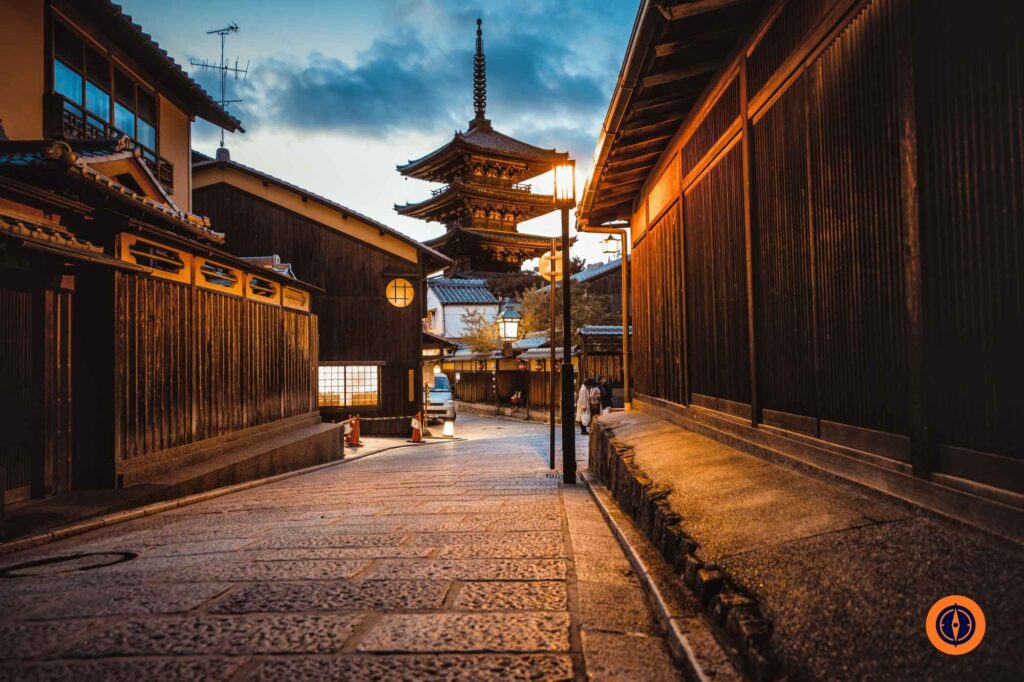
Transport Costs in Japan
Japan’s daily transit is generally affordable roughly ¥1,000-¥1,500 per day but intercity travel is costly. A Tokyo-Kyoto Shinkansen costs about ¥14,500 while the 7-day JR Pass is rarely worth it for a standard first-time itinerary. The nationwide JR Pass is generally only useful for completing long-distance and heavy movements across multiple regions such as Tokyo > Kyoto > Hiroshima and etc to break even while simple route like Tokyo, Kyoto, and Osaka will become unnecessary.
Instead, consider to use an IC card for local travel and individual tickets for the main line. IC cards are not discount passes, but a stored-value cards that enable convenient tapping across all buses, subways, and trains. They reduce the headache of purchasing individual paper tickets for each ride. Subway-specific passes do exist such as Tokyo Subway Tickets begin at ¥1,000-¥1,500 for 24 hours but they are only valuable if you use the subway frequently like 3-4 times a day.
Getting into the city centres from the airport is the first transit expense and it can affect the cost of your arrival day. Narita Express (N’EX) links Narita Airport to Shinagawa and Tokyo stations in approximately 1 hour, Skyliner links Narita to Ueno (Tokyo) in 36 minutes, and Tokyo Monorail which is the quickest way to get from Haneda Airport to central Tokyo (Hamamatsucho station) which takes about 15 minutes. Therefore, compare Haneda vs Narita is important in helping to understand the late-arrival risk, hotel area, and transfer time.
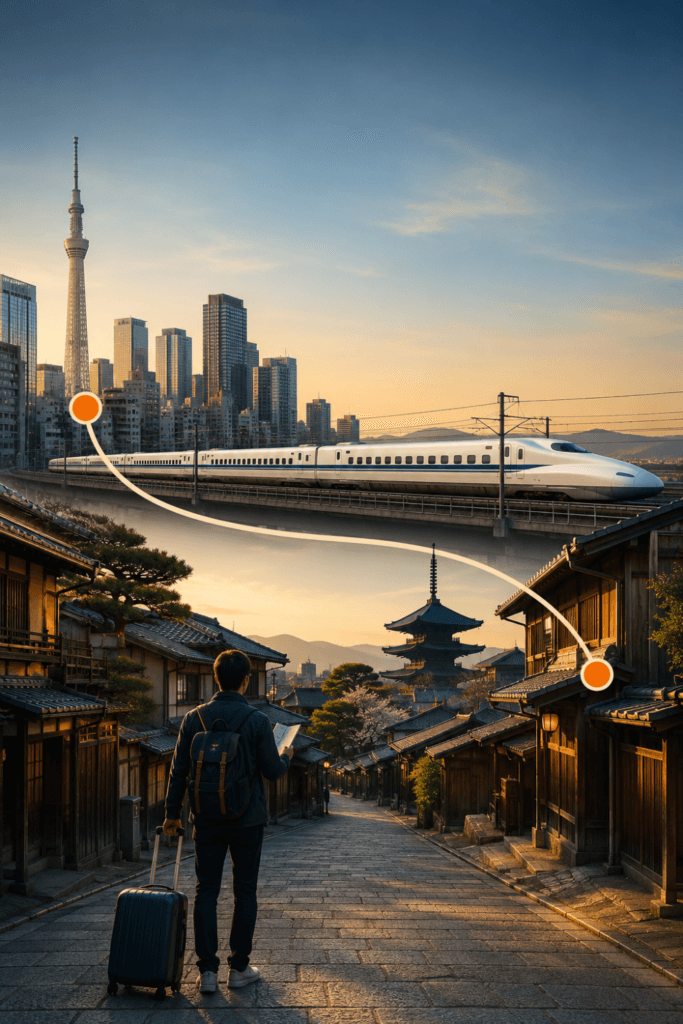
Tokyo to Kyoto move is often the largest transport decision during your first Japan trip, hence before choosing according to ticket price only, you should also consider to compare the Shinkansen, bus, and flight options.
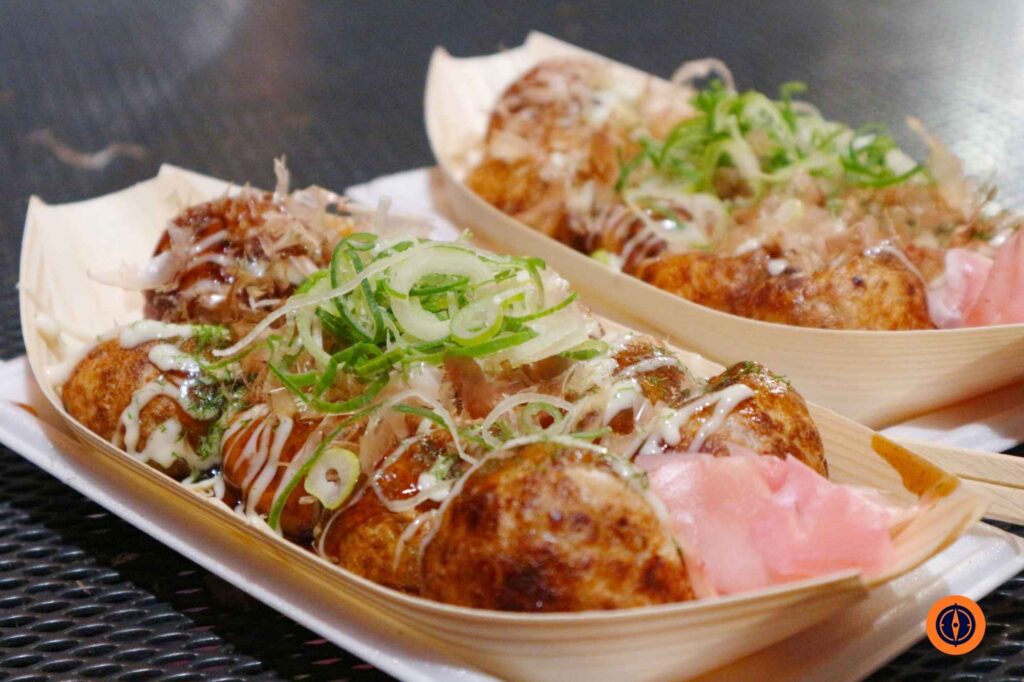
Food Costs in Japan
Japan is one of the few developed nations where eating cheaply does not mean eating poorly. A realistic daily food budget is:
- Tight budget: It means supermarket or convenience store meals, udon, soba, donburi, curry, ramen, simple lunches and etc where the cost ranges from ¥2,500 to ¥4,000 per day.
- Mid-range budget: It gives you more flexibility where you can use convenience stores still while also sit down to enjoy coffee breaks, snacks, izakaya meals, department store food halls and casual sushi and the cost can ranges from ¥4,500 to ¥7,500 per day.
- Comfort budget: It offers nicer restaurants, reserved dining, hotel breakfasts, and etc and the costs can range from ¥8,000 to ¥12,000+ per day.
Moreover, eating alone in Japan is not just acceptable but also recognised as the culture norm, known as ohitorisama. Solo dining is highly convenient and special etiquette is not needed. For instance, many ramen shops like the popular Ichiran chain which feature individual counter booths, you can order and eat privately without interacting with staff and 24/7 spots like Yoshinoya and Matsuya are designed for fast and seated dining,
The best strategy in food budget is not chasing the cheapest meals but avoiding the tourist-areas where the prices can be up to 3 times higher a day.
Sightseeing and Daily Spending
If you avoid turning every day into a paid checklist, the sightseeings are actually quite affordable in Japan. By balancing inexpensive street food and free neighbourhood walks with a few curated paid attractions, you can save money while also enjoy authentic Japan cultures. A realisitc budget for sightseeings as follows:
- Budget: ¥1,000 to ¥2,000 per day
- Mid-range: ¥2,000 to ¥4,500 per day
- Comfort: ¥5,000+ per day
When planning daily sightseeing budget, you can easily offset your spending by balancing the free cultural experiences with paid highlights. For example, Tokyo’s Meiji Jingu and Senso-ji Temple is completely free to enter and are among the best sensory experience in the city. Besides, you also need to protect your transport budget for sightseeings by using localized IC cards such as PASMO or Suica, navigation apps, and booking individual Shinkansen tickets for long-distance hauls in advance to remain efficient.
This does not include special seasonal events, high-end experiences, premium guided tours, or major theme parks.
Mobile Data, Laundry, Luggage, and Small Extras
Putting aside a daily buffer for travel expenses like coffee, laundry, and mobile data is important as it keeps your budget realistic and avoids those costs from building up into unexpected surprise.
For couples or solo travellers, eSIMs are cost-effective and incredibly convenient. You can install it before departure and be connected right after you landed in Japan. If you’re travelling in a group of 3 or more, a pocket Wi-Fi router is a great choice which enables you to connect multiple devices and can be picked up at airport or delivered straight to your hotel.
Doing laundry allows you to pack lighter and also saving from additional baggage fees, many hostels generally offer detergent and coin laundries which range between ¥500 and ¥1,000.
Besides, if you plan to hop between cities, you can find self-service coin lockers at most of the train stations cost between ¥300 and ¥1,000 per day depending on the locker size. If you prefer more comfortable service for larger bags, you can consider for luggage forwarding service and the service provider will send your bags to hotels for roughly ¥2,000 per item
A realistic budget is:
- 7 days: ¥5,000 to ¥12,000
- 10 days: ¥8,000 to ¥16,000
- 14 days: ¥12,000 to ¥25,000
Average 7-Day Japan Budget
If your 7-day plan related to “Golden Route” , do expect the budget ranges from ¥125,000 to ¥230,000 per person, excluding international flights. This provides a comfortable experience which covering some attractions, city transit, casual restaurant meals, and mid-range hotels.
Below is the detailed cost breakdown per individual:
- Accommodation: ¥35,000 to ¥95,000 for central business hotels or private rooms.
- Intercity Transport: ¥29,000 (for a 7-day single direction trip, individual Shinkansen tickets are more cost-effective compared to the nationwide Japan Rail Pass) and a round-trip Shinkansen between Tokyo and Kyoto/Osaka costs roughly ¥29,000.
- Local Transport: ¥10,000 to ¥14,000 (eg. using an IC card such as Pasmo or Suica for Osaka, Kyoto, and Tokyo subways).
- Food: ¥35,000 to ¥55,000 per week for a mix of casual dining, convenience stores, and budget chains.
- Sightseeing: ¥7,000 to ¥22,000.
- Mobile Data & Extras: ¥5,000 to ¥12,000 (e.g., pocket WiFi rentals or eSIMs).
Average 10-Day Japan Budget
A 10-day itinerary in Japan that paired with “Golden Route” (Tokyo, Hakone, Kyoto, and Osaka) is the sweet spot for first-timers. It avoids burnout and maintaining your budget at around ¥180,000 to ¥300,000 per person (excluding international flights).
Depending on your travel style, expect to have a budget buffer as above mentioned for this 10-day loop:
- Mobile Data, Laundry & Extras: ¥8,000 to ¥16,000
- Sightseeing & Admissions: ¥12,000 to ¥35,000
- Food & Dining: ¥28,000 to ¥75,000
- Local Transit & IC Card: ¥8,000 to ¥16,000
- Intercity Transport: ¥20,000 to ¥40,000
- Accommodation: ¥55,000 to ¥150,000
Average 14-Day Japan Budget
A calm 14-day Japan trip concentrates on major cities and taking well-planned day trips which helps to maximize the budget around ¥250,000 to ¥420,000 per person (excluding international flights).
Depending on your comfort, below is the general breakdown of the budget for 14-day itinerary:
- Mobile data, laundry, buffer, and extras: ¥12,000 to ¥25,000
- Sightseeing: ¥18,000 to ¥50,000
- Food: ¥40,000 to ¥110,000
- Local transport: ¥12,000 to ¥25,000
- Intercity transport: ¥30,000 to ¥70,000
- Accommodation: ¥80,000 to ¥230,000
Final Verdict
To have a carefree Japan itinerary requires strategies which can save you from hidden costs such as expensive international routing, costly last-minute Shinkansen (bullet train) tickets, or backtracking.
One of the strategies is to optimize your route such as the the “Golden Route” eradicates long-haul travel and keeps the costs of intercity transport predictable, and also use the Japan Rail Pass Calculator to check if regional or nationwide pass makes sense compared to individual tickets. Besides, you should also book the accommodation in advance as the earlier you book for your travel dates, the less you will end up paying. Moreover, there is no need to eat at luxury kaiseki restaurants every night to enjoy high-quality Japanese cuisine. Convenience stores or konbini like Lawson or 7-Eleven, standing noodle bars, food halls in department stores provides incredibly delicious, cheap, and fresh meals. While for sightseeings, majority of public parks, local markets, and shrines are completely free such as Fushimi Inari in Kyoto or Yoyogi Park in Tokyo. Musuems and Temples typically on charge between ¥500 and ¥1,500.
The ultimate goal of breaking down the budget is to support your itinerary effectively instead of constantly resolving planning problems.
Frequently Asked Questions (FAQ)
How much money do I need for one week in Japan?
Consider for a budget buffer roughly ¥130,000 to ¥220,000 per person for a comfortable first-time trip excluding the international flights. This covers your basic sightseeing, transportation, food and hotels, offering flexibility to enjoy Japan without feeling restricted.
Is Japan expensive for solo travelers?
While solo travelers face a slight financial premium on private hotel rooms because the bill cannot be split, Japan heavily offsets this via its magnificent ohitorisama (solo dining) culture. Single counter seats, fast-casual ticket machines, and individual attraction tickets make independent budget travel incredibly seamless and affordable.
Is the Japan Rail Pass worth it for Tokyo, Kyoto, and Osaka?
For a simple “Golden Route” where it connects Tokyo, Kyoto, and Osaka generally is not required to have the nationwide Japan Rail Pass, local transport and individual Shinkansen tickets offer much better value due to rising price in the JR pass.
Should I book hotels early for Japan?
Yes, booking early is absolutely important especially for peak periods like autumn foliage or cherry blossom season. You should book the accommodation 6-9 months in advance. Late booking can easily double or triple your room costs as the popular and strategic locations tend to sell out fast.
What should I book first when budgeting for Japan?
Book flights first, then accommocation that is strategic and align with your trip, next will be deciding your intercity transport plan. After that, plan major activities, travel insurance, and mobile data, avoid to buy transport passes before your route is evident.
Disclosure: This post may contain affiliate links.


Compare prices across top platforms in seconds.