Kyushu Without a Car
A Practical Train and Bus Guide
Introduction
Travelling around Kyushu without a car can be a rewarding way to experience southern Japan. You can explore Nagasaki’s historic neighbourhoods, spend an evening at Fukuoka’s food stalls, stay in a hot-spring town and travel south towards Kagoshima without renting a vehicle. The important decision is not whether public transport exists, but whether it reaches the places you want to visit at times that suit your trip.
Cities and rural destinations require different approaches. A railway station may put you close to restaurants and accommodation, while a mountain viewpoint or countryside ryokan can involve another bus, a property transfer or a substantial walk. This guide explains those differences so you can choose a route before committing to hotels and transport passes.
Research checked: 16 September 2026. This is a source-researched planning guide, not an account of a personally tested journey. Route examples are editorial suggestions; transport schedules, availability and access restrictions should be checked for your travel dates.
Which Kyushu Destinations Work Without a Car?
Start with the experiences you want, then examine their transport requirements. Fukuoka and Nagasaki suit city exploration, while Beppu, Yufuin and Kurokawa offer different kinds of hot-spring stays. Aso requires closer attention to onward transport and current restrictions.
| Destination | Main reason to consider it | Important planning distinction |
|---|---|---|
| Fukuoka | Food, shopping and an introduction to Kyushu | Hakata is the main JR station; airport access depends on your terminal. |
| Nagasaki | History, museums and harbour-side neighbourhoods | The fast rail journey from Hakata requires a change at Takeo-Onsen. |
| Kumamoto | Castle sightseeing, gardens and a southbound railway stop | The station and main sightseeing areas are separate. |
| Kagoshima | City exploration and views towards Sakurajima | Island sightseeing requires more planning than the ferry crossing alone. |
| Beppu | Bathing, steam-filled streets and geothermal cooking | Choose between station convenience and the hot-spring neighbourhood you want to experience. |
| Yufuin | A ryokan stay and walking around the town | Your accommodation’s location matters more than securing one particular sightseeing train. |
| Kurokawa Onsen | An accommodation-focused hot-spring overnight | Coordinate the reserved bus with the property’s arrival arrangements. |
| Aso | Volcanic landscapes and countryside | Reaching Aso Station does not complete the journey to the mountain sightseeing area. |
Think of your route in directions rather than as a circuit you must complete. From Fukuoka, Nagasaki lies to the west, Kumamoto and Kagoshima form a southbound railway route, and Beppu and Yufuin sit towards the east. Combining all these directions is possible on a longer holiday, but a shorter trip benefits from choosing one main part of the island. If you are still comparing Kyushu with other destinations, the best cities in Japan guide provides broader context.
City Stays: What Happens After the Train?
Fukuoka: a practical beginning, with worthwhile evenings. Fukuoka’s main JR station is Hakata, which is useful to know when searching for trains and hotels. Staying nearby can simplify an early intercity departure, while another neighbourhood may better suit a stay focused on the city itself. International arrivals should not assume the subway is immediately outside their arrival hall: it connects to the domestic terminal, reached from the international terminal by a free shuttle when using this route. Follow the airport’s subway instructions when comparing transfers. Leave an evening for the city rather than using Fukuoka only as somewhere to change trains. Its yatai offer dishes such as ramen, grilled skewers and oden, although individual stalls may not open in poor weather. The official yatai guide explains the experience and etiquette.
Nagasaki: particularly worthwhile when history matters more than covering distance. The usual fast railway journey from Hakata combines a limited express with the Nishi Kyushu Shinkansen, changing across the platform at Takeo-Onsen. This is a planned connection, not a reason to avoid the journey, but it should not be described as a direct Shinkansen from Fukuoka. JR Kyushu explains the transfer. Once in Nagasaki, organise sightseeing into areas rather than repeatedly crossing the city. The Peace Park and Atomic Bomb Museum deserve time without another reservation immediately afterwards; Dejima, Chinatown and the southern historic districts offer a different focus. Champon noodles or castella can form part of that exploration rather than requiring a separate food excursion. The official city introduction is useful for choosing priorities, while the tram operator explains how to ride.
Kumamoto: choose the hotel around the journeys you will actually make. Kumamoto Station is convenient for railway arrivals, but it is not beside every major attraction. The castle area and Suizenji Jojuen Garden require additional local travel, so compare a station-area stay with accommodation closer to the city activities you have chosen. The official sightseeing-access guide helps show these relationships, although exact timings should be checked against current services. Kumamoto works well as a city stop on a southbound route; it should not automatically become a base for a long list of countryside excursions. If you have two nights, you usually have one complete day between the arrival and departure dates. Spending that day at Aso means giving up much of your opportunity to explore Kumamoto itself.
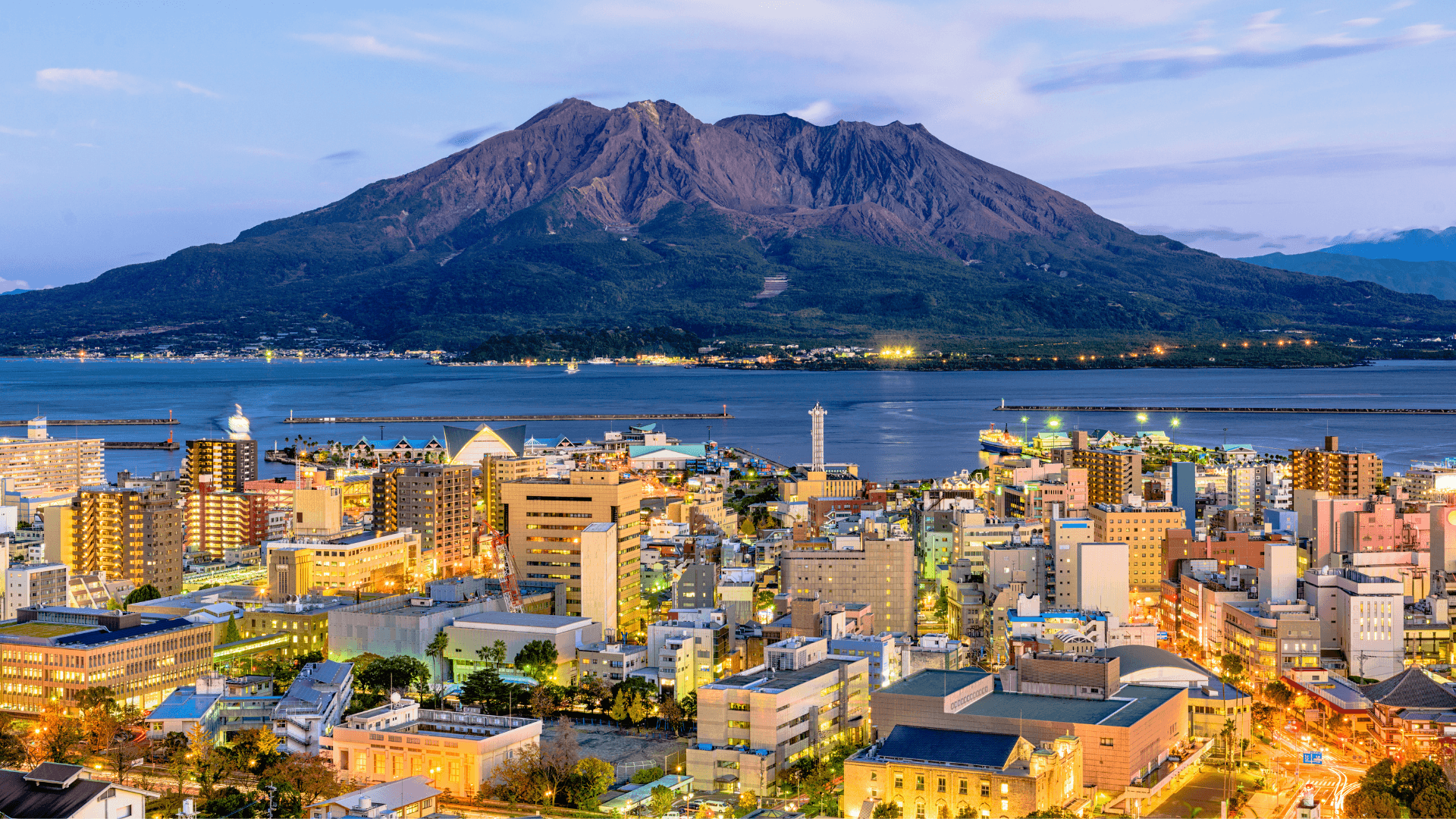
Kagoshima: a southern destination, not simply the end of the railway. Kagoshima-Chuo is the Shinkansen arrival station, but the city, ferry terminal and Sakurajima require separate local journeys. A stay here makes more sense when you want time for both urban sightseeing and the bay landscape, rather than travelling south only to turn around the following morning. For Sakurajima, first choose the visitor areas you want to reach, then match those places to island transport and the return crossing. Do not mistake reaching the ferry terminal for having a complete island itinerary. The official Kagoshima transport guide covers these connections and airport access. Sakurajima is an active volcano: follow current local restrictions and consult JMA’s volcanic information, rather than assuming every area is accessible.
Choosing a Hot-Spring Stay Without Driving
Beppu: decide which neighbourhood you want to spend time in. A hotel near Beppu Station can simplify railway arrivals, but it creates a different stay from accommodation in Kannawa. If your main interests are steam-filled streets, bathing and geothermal cooking, examine the location of those experiences before choosing solely on station proximity. Kannawa’s jigokumushi uses hot-spring steam to cook ingredients, providing a food experience connected to the neighbourhood rather than a meal added between unrelated attractions. The official Oita guide to Kannawa explains its hot-spring facilities and cooking traditions. Also distinguish sightseeing pools from baths intended for visitors to enter. If bathing is important, identify a suitable facility or accommodation option explicitly; visiting geothermal sights is not a substitute for arranging your onsen experience.
Yufuin: separate the destination from the sightseeing train. Yufuin no Mori can be part of the appeal, but it should not be the only way your holiday can work. All seats are reserved, and JR Kyushu currently advises travellers to consider alternative connections via Kokura and Oita when the popular services are unavailable. Check the official Yufuin no Mori information before making the train central to your plans. After choosing how to arrive, investigate the ryokan’s exact location. “In Yufuin” does not necessarily mean an easy walk with luggage from the station. Ask whether a pickup operates, whether it must be requested, and when you need to arrive if dinner is included. A property that suits those arrangements can matter more than a slightly lower room rate.
Kurokawa Onsen: achievable without a car, but best planned around the overnight experience. Kurokawa is not a railway destination, yet that does not make it inaccessible to non-drivers. The Fukuoka service is reservation-based, and Sanko specifies an advance booking deadline for departures from Kurokawa. Consult the operator’s reservation rules rather than assuming you can decide on the return bus that morning. Before booking accommodation, check the walk or transfer from the bus stop, the property’s meal arrangements and the following day’s connection. An overnight stay is particularly logical when the ryokan, bathing and dinner are the reason for coming. It is less convincing when added only to collect another destination between two distant cities.
Visiting Aso: Landscape Access and Crater Access Are Different
Aso needs a more detailed transport check than a city visit. From Aso Station, Sanko’s bus route serves Kusasenri and Asosanjo Terminal; boarding is first-come, first-served rather than reserved. Examine the official route information and both outward and return departures before leaving your accommodation. Build the day around the places you can reach without relying on the final possible connection. If your principal interest is the landscape around Kusasenri, assess that visit on its own merits rather than treating it merely as a stop before the crater.
At the research check on 16 September 2026, Aso was under a Level 2 eruption warning, with entry prohibited within approximately one kilometre of the crater. A sightseeing bus running towards the mountain is not permission to enter the restricted area. Check both JMA’s current Aso information and the local crater-access notice before travelling. Conditions can affect the wider day as well, so keep an alternative that does not depend on mountain visibility or access. Do not book Aso on the assumption that a crater visit will be possible.
Two Car-Free Route Examples
Seven calendar days: Fukuoka and Nagasaki. Use three nights in Fukuoka, two in Nagasaki and one final night in Fukuoka, giving six hotel nights overall. With arrival on day one, this leaves days two and three for Fukuoka, a move to Nagasaki on day four, a complete Nagasaki day on day five, and the return on day six before departure on day seven. The transfer dates may contain sightseeing, but they are not equivalent to uninterrupted days in either city. This is a focused introduction for readers interested in food and history, not an attempt to see all of Kyushu. The final Fukuoka night supports a departure from there; if a suitable Nagasaki departure works better, revise the route rather than returning automatically.
Eight calendar days: Fukuoka, Kumamoto and Kagoshima. Allocate two nights to Fukuoka, two to Kumamoto and three to Kagoshima. Arrive on day one, explore Fukuoka on day two, move to Kumamoto on day three, and use day four there before travelling to Kagoshima on day five. Days six and seven then provide space for Kagoshima and a permitted Sakurajima visit, with departure on day eight. This example assumes suitable onward travel from Kagoshima; it does not include returning to Fukuoka. Check the flight and airport transfer before booking the hotels. If hot springs matter more than this southbound journey, redesign around Beppu or Yufuin instead of attaching them to the end. These examples show alternatives, not two halves of a compulsory circuit.
Tickets, Passes and Costs Beyond the Railway
Choose the route before choosing a pass. As a reference, JR Kyushu currently lists the adult Northern Kyushu five-day pass at ¥17,000 and the All Kyushu seven-day pass at ¥26,000, with sales-channel pricing differences noted. Check eligibility, validity and the actual journeys you intend to take against the official pass conditions. The Northern pass does not cover the railway journey all the way to Kagoshima. JR Kyushu passes also exclude other operators’ buses, subways and railways, and the Sanyo Shinkansen between Hakata and Kokura. A pass that covers your principal trains can therefore still leave a meaningful local-transport bill.
Compare the price of eligible individual journeys within the pass’s validity period, not every journey anywhere in your holiday. A predominantly city-based stay may not generate enough long-distance travel to justify a rail pass. Conversely, a bus-led route deserves a separate comparison rather than adding a bus pass automatically to a railway pass. SUNQ’s guidance makes clear that having the pass does not replace a seat reservation on services requiring one. Its official FAQ explains that distinction.
Accommodation choices can change the budget as much as transport. Compare a ryokan package that includes dinner and breakfast with a room-only hotel on a like-for-like basis, checking what is actually included rather than assuming every ryokan package is the same. Add local journeys, any property transfer charges, attraction admissions and luggage arrangements separately. The Japan travel budget breakdown can help organise spending categories, but its classic-route examples are not a substitute for pricing your Kyushu journeys.
Conclusion
For a first car-free Kyushu trip, choose a small number of destinations that offer genuinely different experiences and fit the transport you are willing to use. City stays, a ryokan overnight and a countryside excursion can all belong in the same holiday, but they require different arrangements. Once you understand those differences, you can decide where to spend your time with considerably more confidence.
Frequently Asked Questions (FAQs)
Can I use Suica or ICOCA throughout Kyushu?
Do not rely on one transport IC card for every operator. Kumamoto illustrates why: the city tram operator currently lists nationwide cards including Suica and ICOCA, while Sanko Bus states that nationwide transport IC cards stopped being accepted on its services in November 2024. Check the tram’s payment information and Sanko’s payment FAQ for the relevant journey. Contactless bank-card payment is a different system from Suica or ICOCA, even when both involve tapping a reader. Keep a usable alternative, including cash, and do not assume an IC-card balance replaces the tickets or reservations needed for limited express and Shinkansen journeys.
Can I bring a large suitcase on the buses?
Check the specific service before booking, because a highway coach and a local sightseeing bus should not be assumed to have the same storage arrangements. Sanko’s guidance says acceptance of luggage for its luggage compartment depends on factors including dimensions, weight, packing and safety; it is not an unconditional promise that any suitcase will fit. Consult its luggage guidance and contact the operator if your bag is unusually large. For a short rural overnight, a smaller bag can make the journey easier, but confirm any storage or forwarding arrangement before leaving your main suitcase behind. A reserved passenger seat does not by itself answer the luggage question.
Can Kyushu be my first Japan trip without visiting Tokyo, Kyoto or Osaka?
Yes. There is no requirement to begin with the classic three-city route, and a focused Kyushu holiday can suit travellers interested in regional food, history, hot springs and volcanic landscapes. The important comparison is between complete trips: flights, airport transfers, local transport and the experiences you most want. If reaching Kyushu involves a connection through another Japanese city, that does not oblige you to add a sightseeing stay there. Choose a route that fits your available time rather than adding Tokyo or Kyoto simply because they appear in most first-trip itineraries.
Disclosure: This post may contain affiliate links.


Compare prices across top platforms in seconds.