Namba vs Umeda vs Shinsaibashi
Where Should First-Time Visitors Stay in Osaka?
Introduction
For most first-time travellers, comparing Namba vs Umeda vs Shinsaibashi eventually leads to one main concern: what role will Osaka play in your Japan Itinerary? Your decision determines whether you stay near a neon-lit street food alley or a bullet train connection.
If Osaka is your main hub for lively evenings, street food, and nightlife, Namba is the best choice. If you intend to make use of the city as a transit base for day trip to Nara, Kobe, or Kyoto, Umeda (Kita) is more practical in overall. While Shinsaibashi provides a balance approach, travellers can enjoy the premier shopping and walkable distance of the Minami district while maintaining within walking distance of Namba.
The distinctions go much deeper as each district provides a completely different combination of regional shinkansen routes, airport express lines, and private railways. The navigation can also be notoriously misleading for visitors as “Namba Station” in fact comprises of five interconnected, separate railway terminals, while “Umeda” covers a large network around JR Osaka Station, three distinct subway stations, and multiple private rail lines (Hankyu and Hanshin).
This guide compares Namba, Umeda, and Shinsaibashi with six metrics – true hotel value, noise levels, evening atmosphere, day-trip logistics, airport convenience, and transit accessiblity which helps to map your accommodation directly to your travel style to remove the daily transit friction.
If you’re planning for a larger route, begin with the Osaka travel guide for first-time visitors or browse the full breakdown of where to stay in Osaka for first-time visitors if you want to compare alternative hubs like the bullet-train terminal at budget-friendly Tennoji or Shin-Osaka.
Quick Answer: Namba, Umeda or Shinsaibashi?
Choose Namba if this is your first Osaka visit and you want instant access to Dotonbori, active evenings, late-night entertainment, and vibrant street food. Namba is also the most practical base for having limited-express trains to Kansai International Airport (KIX), as well as day trips to Mount Koya and Nara when your accommodation locates near the correct regional railway lines.
Choose Umeda if Osaka will be treated as broader transit hub for experiencing the Kansai region. The interconnected JR Osaka Station and Umeda complex offers direct and exceptionally fast connections toward Himeji, Kobe, and Kyoto, alongside luxury hotel portfolios, premium dining choices, and high-end department stores.
Choose Shinsaibashi if you want to live within the central Minami district but prefer to bypass the busiest part of Dotonbori or the absolute chaotic core of Nankai Namba Station, It provides direct Osaka Metro access, local restaurants, and boutique shopping, although it should not be treated as a fully quiet neighbourhood by default.
| Area | Best Reason to Stay | Particularly Useful For | Main Limitation |
|---|---|---|---|
| Namba | Iconic first-time Osaka sights, nightlife, and street food | Minami exploration, Mount Koya, Nara, Kansai Airport (KIX) | Navigating several separate Namba stations, street noise, and heavy pedestrian crowds |
| Umeda | Polished hotels, premium shopping, and regional day trips | Direct train lines to Himeji, Kobe, Kyoto and Shinkansen transfers | Less immediate access to Dotonbori and vast station complex |
| Shinsaibashi | Central Minami location, local dining, and high-street shopping | Walking access to both Honmachi and Namba and fast intra-city metro travel | Weekend crowds can block main shopping arcades and not a regional railway terminal |
The most valuable rule for travellers is not simply “Namba for fun, Umeda for transport, and Shinsaibashi for balance.” You must also verify which railway line you will frequently use and calculate the actual walking distance from your hotel to the particular station.
Understand the Station Names Before Choosing a Hotel
Namba is a station district, not one station
A hotel described as “near Namba” in booking sites can be JR Namba, Osaka-Namba on the Kintetsu and Hanshin networks, Osaka Metro Namba, or Nankai Namba. While these facilities link underground via shopping passages like Namba Walk, they are entirely separate infrastructures and are not interchangeable hotel locations.
The official guide details complex transfers between the Sennichimae subway lines, Yotsubashi, and Midosuji, alongside regional links to Kintetsu, Hanshin, JR, and Nankai services. This range of connections makes Namba an exceptional useful transit hub, but it needs travellers to check the hotel description carefully to avoid unexpected 15-minute walks before their morning commute.
For instance, Kintetsu’s current Osaka-Namba station guide estimate that a standard transfer from the center of the Kintetsu platform requires roughly 11 minutes to reach Nankai Line Namba Station and 9 minutes to reach JR Namba. Those times only estimates the average walking pace but exclude in searching for an exit leading to a hotel or navugating multi-level stairs while carrying heavy luggage.
If Kansai Aiport is the main priority, booking a hotel directly beside Nankai Namba Station is the most efficient option. For a day trip to Nara’s temples, staying near the Kintetsu platforms at Osaka-Namba Station is more relevant. For travellers interested on capturing the iconic Glico Running Man sign, prioritizing proximity to Osaka Metro Namba Station Exit 14 or Exit 25 may matter more, so you can reach under 5 minutes with step-free canal promenade.
Umeda and Osaka Station form another large complex
The northern Kita hub includes Nishi-Umeda, Higashi-Umeda, Osaka Metro Umeda, and JR Osaka Station, alongside the private rail terminals of Hanshin Osaka-Umeda and Hankyu Osaka-Umeda. These stations serve different lines but connect through a massive commercial and underground network that locals call the “Umeda Dungeon” due to frequent smartphone GPS dropouts.
There are intricate transfers linking Nishi-Umeda, Higashi-Umeda, Hanshin, Hankyu, and JR lines which gives the district unparalleled regional coverage across western Japan, but the station complex can take time to comprehend during your first visit.
While a hotel located on the west side of Osaka Station may provide seamless acess to JR rapid lines but will need a longer walk if you want to catch a Hankyu train. Conversely, a property to the northeast favors the Hankyu Osaka-Umeda lines to Kyoto but consumes significant time to JR platforms. Hence, never assess an accommodation solely based on the words “Umeda area”.
Before concluding any booking, determine the exact railway network you plan to use during your journey and trace the walking route from the hotel lobby to that railway’s ticket gate. This is specifically important for travellers with oversized suitcases, limited mobility, or strollers. If you get lost underground, consider to walk up to the street level and use buildings with high-visibility like the Umeda Sky Building or the red HEP FIVE Ferris Wheel as anchors to reorient your directions.
Shinsaibashi is simpler for city transport
Shinsaibashi locates squarely on the Osaka Metro Midosuji Line which granting travellers a direct and single train ride to major city centers including the Shin-Osaka Shinkansen (bullet train) terminal, Tennoji, Namba, and Umeda. The central station also connects internal transfers with Yotsubashi Station on the Yotsubashi Line and the Nagahori Tsurumi-ryokuchi Line.
This straighforward subway layout makes Shinsaibashi convenient for moving around Osaka, but it does not serve as a main regional railway terminal role as Umeda or Namba. A day trip to surrounding cities like Nara or Kyoto will always need a walk to another railway station or a metro journey.
The specific side of the Shinsaibashi also matters as it will drastically change your evening environment. A hotel booked on the south towards Dotonbori may feel almost like a Namba stay, while the hotel situated further north toward Honmachi or west toward Amerikamura offer a much quieter neighbourhood atmosphere. Always cross-check the exact street address and walking route rather than depending only on the wide neighbourhood designation.
Namba: Best for Food, Nightlife and Southern Connections
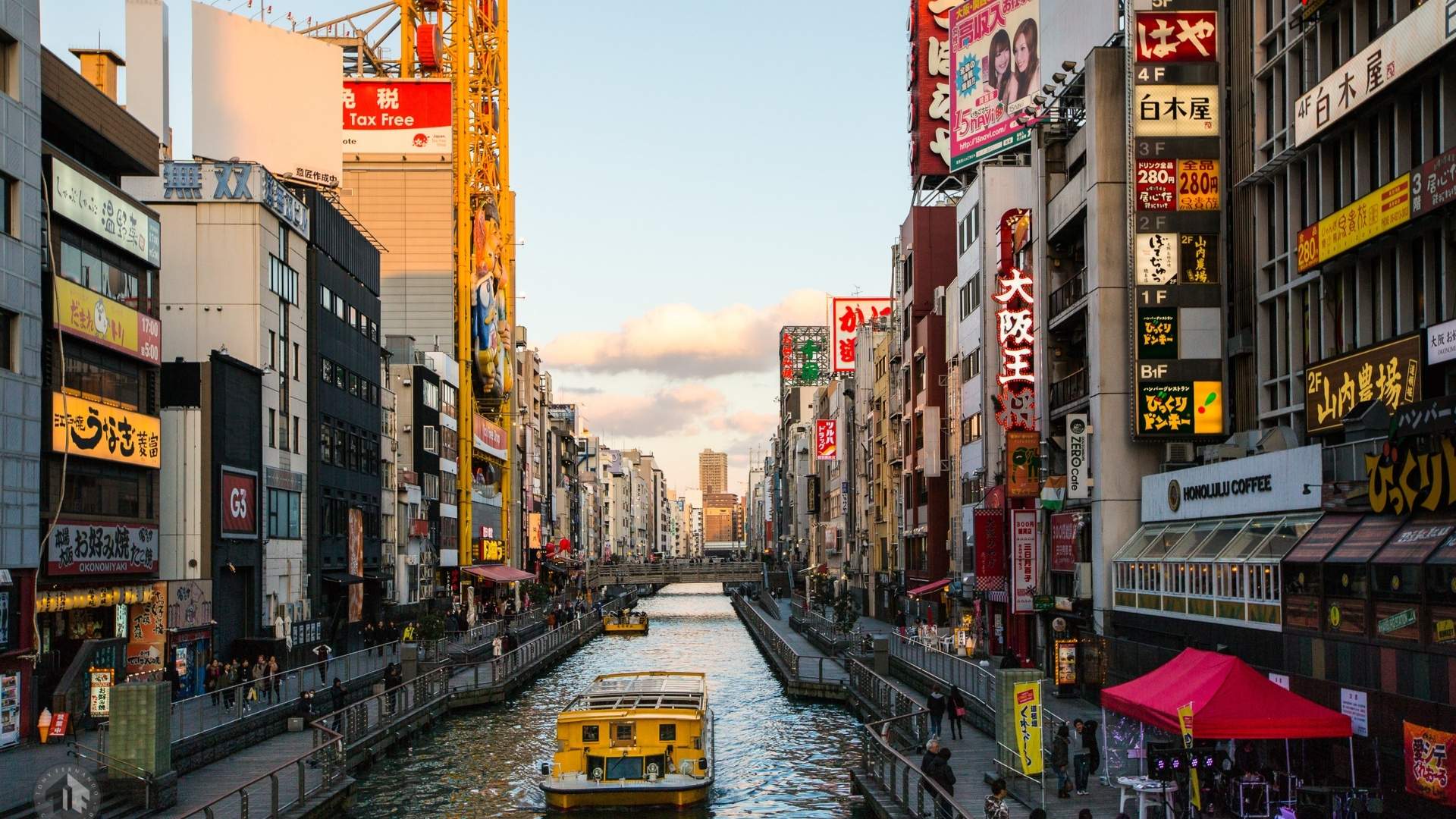
Namba is usually the ultimate base for first-time travellers who want to experience the iconic and neon-lit energy right outside their doorstep in Osaka. Located in the heart of the Minami (South) district, Namba allows you to have popular districts within short walking distance like:
- Dotonbori: Osaka’s popular street-food running along the canal.
- Namba Parks: A modern and massive architectural shopping complex with a rooftop garden.
- Hozenji Yokocho: A stone-paved alleyway filled with traditional izakayas.
Minami operates as the city’s entertainment epicentre and premier shopping. Staing here means you can walk straight to dinner, drop off your bags, and return from day trips without spending additional money or time on evening subway commutes.
Namba’s transport strengths
It is the undeniable champion for southern regional travels and airport convenience. It provides direct access to three critical rail networks:
| Railway Line | Main Destination | Key Advantages |
|---|---|---|
| Nankai Electric Railway | Kansai International Airport (KIX) | 34 minutes via Limited Express Rapi:t 45 minutes via Airport Express |
| Kintetsu Railway | Nara (Kintetsu-Nara Station) | Direct corridor; drops you closer to Nara Park than JR lines. |
| Nankai Main Line | Koyasan (Mount Koya) & Wakayama | Direct access for coastal trips and mountain temple stays. |
Namba’s limitations
The streets surrounding major arcades and Ebisubashi Bridge can experience heavy foot traffic. A hotel located directly above an entertainment street will also experience street noise late into the night.
It can also be confusing as every station like JR Namba, Osaka Metro Namba, Kintetsu-Osaka Namba, Nankai Namba are completely separate structures under the same building. A hotel advertised as “near Namba Station” might be a 15-minute underground walk from the particular train line you actually need.
Choose the specific station before selecting the hotel. For a quieter stay, it is recommended to book accommodation 2-3 blocks away from the loudest Dotonbori blocks.
Umeda: Best for Regional Transport and a Polished Base
Umeda is the heart of the Kita (North) district and it is the main commercial ad transit gateway. The area also features wide underground dining networks, upscale sky lounges, and massive department store food halls (depachika).
Umeda’s transport strengths
In addition, if you want to explore the wider Kansai region, Umeda is the best choice, it removes the need for morning subway transfers and saving travel time across a multi-day trip.
- Kyoto & Kobe via JR: From JR Osaka Station, you can board direct commuter trains along the JR Kobe Line and JR Kyoto Line to reach Himeji Castle, Sannomiya (Kobe), and Kyoto.
- Private Railways (Hankyu & Hanshin): Hankyu Umeda Station provides affordable and direct lines to Kobe Sannomiya and Kyoto Kawaramachi (central shopping district), while Hanshin Electric Railway offers alternative links to downtown Kobe.
- Shinkansen (Bullet Train) Access: While the Shinkansen departs from Shin-Osaka Station, Umeda is just a 4-minute transit ride away via the JR lines or Osaka Metro Midosuji Line.
Besides, Umeda also provides direct access to Kansai International Airport (KIX) where the JR Kansai Airport Rapid Service links KIX directly to JR Osaka Station in roughly 65 minutes. Namba is generall quicker for the Nankai connection, but the better option still depends on the departure time, ticket type, luggage, and hotel. Airport buses may also serve parts of the Umeda district and Osaka Station due to timetables and specific hotel stops are subject to seasonal changes, check the nearest bus stop or exact hotel before considering airport bus as your final plan.
Umeda’s limitations
The main disadvantage is the navigation as the combined station complex like three separat subway lines, Hanshin, Hankyu, and JR Osaka) forms a massive and multi-level that connected to extensive underground shopping areas. Navigating the routes in this area with heavy luggage can expect the possibilities of wrong exits and multi-level stairs.
If you want late nights out in Dotonbori, you will have to depend on the Midosuji subway line which stops operating around midnight. If you are travelling with large bags, pick a hotel that provides a clear street-level walking route from a particular station exit instead of a hotel that vaguely advertised within “the greater Umeda area.”
Shinsaibashi: Best for Shopping and a Central Minami Stay
Shinsaibashi belongs to Osaka’s wider Minami area and links naturally with Horie, Amerikamura, Dotonbori, and Namba. It is the perfect area for hotel stay if you want direct access to dining streets and central shopping but prefer to avoid the chaotic crowds directly outside major regional transit hubs like Namba Terminal or Umeda.
Shinsaibashi-Suji is an covered shopping arcade stretching roughly 600 metres through the Minami area. It packed with local cafés, traditional boutiques, and international retail brands which keeps the district vibrant from early morning until late evening.
Shinsaibash’s main strength is not about perfectly halfway between South Osaka (Minami) and North Osaka (Kita), its actual value lies in keeping you within the local cultural experience while offering immediate access via the Osaka Metro Midosuji Line to navigate the rest of the city.
Shinsaibashi’s Strengths
It is perfect if you plan to explore the trendy boutique alleys of Amerikamura and Horie or spend your evenings dining around Dotonbori, but want a hotel buffer zone outside the most concentrated nightlife blocks. it also shines when your trip is entirely focused on exploring Osaka itself instead of taking regional day trips to other prefectures. The Midosuji Line runs through Shinsaibashi Station, making trips north to Shin-Osaka and Umeda (for the Shinkansen) or south to Tennoji completely frictionless.
Shinsaibashi’s Limitations
It is not truly quiet as the streets, Amerikamura, shopping arcade, and the station area towards Dotonbori can remain active and crowded. The noise relies heavily on your hotel’s exact street, nearby businesses, room position, and building insulation. If your itinerary requires catching an early morning train via the Nankai Railway, Kintetsu Line, or JR Line, you will always have to take a 15-minute walk or short metro ride to transfer at Umeda or Namba first.
Which Area Is Best for Your Planned Journeys?
Selecting a hotel location based on your regional day trips will save hours of commuting time. Below table shows which area cuts down on transfers:
| Journey or priority | Stronger area | Reason |
|---|---|---|
| Kyoto | Umeda | The Hankyu Kyoto Line from Osaka-Umeda Station or direct rapid trains via the JR Kyoto Line from Osaka Station. |
| Kobe | Umeda in most cases | Fastest via the Hanshin Main Line, Hankyu Kobe Line, or JR Kobe Line from the Umeda cluster. |
| Himeji | Umeda | Direct access via the Kobe Line special rapid service (approx. 60 minutes) / JR Sanyo Main Line. |
| Nara | Namba | Direct Kintetsu services from Osaka-Namba Station straight to Kintetsu-Nara Station. |
| Koyasan | Namba | The Nankai Koya Line services begin from Nankai Namba Station where you can board the Limited Express Koya. |
| Kansai International Airport | Namba for the simplest rail journey | Most efficient rail route through the train options of direct Nankai Airport Line. |
| Shin-Osaka and Shinkansen | Umeda slightly favoured | Just a 4-minute hop on the JR Kyoto Line from Osaka Station, though Namba and Shinsaibashi provide direct Midosuji Metro access. |
| Dotonbori and Minami evenings | Namba or Shinsaibashi | Removes the need for late-night navigation in the metro, you can easily walk back to your hotel. |
| Mostly Osaka sightseeing | Any of the three | Pick based on the area where you want to spend the evenings. |
If you are considering for repeated Kyoto journeys, you have to first decide whether Osaka should be your base or a day trip from Kyoto. As the convenient Osaka station does not compensate the value of sleeping in Kyoto when your plans require late Kyoto evenings or early temple visits.
How to Compare the True Hotel Value
Hotel rates in Osaka tend to fluctuate due to major events held at venues like the Osaka Castle Hall, autumn foliage, and seasonal cherry blossom timing. Hence, it is not reliable to assume the three areas mentioned is always the cheapest.
To find the genuine value of a room, you can make good use of the steps stated below:
- Compare apples to apples: Record down your guest counts and exact dates. Compare the final checkout price including the local lodging taxes and verify if breakfast or flexible cancellation are matched. A lower non-refundable rate is not equivalent to a refundable room that protects your itinerary which is still being refined.
- Calculate the location cost: If a cheaper room adds 2 metro rides in daily basis, a difficult luggage transfer, or pay for an early morning departure taxi, the savings may not be worthwhile or represent better value in overall.
- Audit your itinerary structure: Consider for how much your time is worth. Spending an additional ¥3,000 per night to be within walking distance of your main transit hub may save 45 minutes of daily commuting stress.
For a deeper dive into estimating your travel funds, you can cross-reference your hotel costs with our comprehensive guide to mapping out the overall budget.
Best Area for a Short Osaka Stay
When time is limited (1-2 days), Namba is the most favorable choice as it streamlines your arrival from Kansai Airport and places you within steps of iconic sights like the Glico Running Man sign. You can maximise your experience in sightseeings because you don’t waste time transferring across town just to drop off your suitcases. Shinsaibashi is an exception for short stay if your primary goal is to visit the high-end boutique shopping or the particular hotel provides significantly better room facilities than Namba.
For extended stay like 3-4 days, you should assess the number of regional journeys. For instance, you choose Umeda if your itinerary includes multiple day trips heading north and west to Himeji, Kobe, or Kyoto, choose Namba if regional day trips include south and east to Nara and Koyasan which mixed with vibrant nightlife, or choose Shinsabashi if you desire a balanced and city-focused vacation like local boutique shopping, cafe culture, and neighbourhood walking.
The 7-day Japan itinerary and 10-day Japan itinerary can help you decide how Osaka fits within the broader route before you proceed to book accommodation.
Conclusion
For most first-time visitors who want to experience Osaka wholly, choose Namba as it offers the best combination of Minami atmosphere, useful southern rail connections, evening activity, and casual dining. Choose Umeda if Osaka is your main stay as it is specifically useful for repeated journeys towards Himeji, Kobe, and Kyoto, and it offers extensive dining and shopping options around Osaka Station. Choose Shinsaibashi when you are looking for central Minami shopping and walkability without staying directly next to Dotonbori or Nankai Namba. All in all, the final decision should be made at hotel level by identifying the evening surroundings, exit, railway, and the station before making the payment. A carefully chosen hotel in any of these three areas can work better than a poorly located hotel.
FAQ: Namba vs Umeda vs Shinsaibashi
Which area is best for first-time visitors: Namba, Umeda or Shinsaibashi?
Namba is the best option if you want lively evenings, casual dining, and Dotonbori within walking distance. It works especially well for a short Osaka stay or when Koyasan, Nara, or Nankai Airport is in your itinerary. Choose Umeda for regional journeys towards Himeji, Kobe, or Kyoto. Choose Shinsaibashi when you want direct access for central Minami and shopping without requiring to stay next to Dotonbori or Nankai Namba.
Is Osaka Station the same as Umeda Station?
No. JR trains use Osaka Station while Hanshin,Hankyu, and Osaka Metro use several Umeda station names. These stations form one connected transport district, but transferring between them requires walking through commercial complex and a large station. Before booking, determine the railway you will use always. A hotel advertised as “near Umeda” can be convenient for JR Osaka Station but may be inconvenient for a particular metro line, Hanshin, or Hankyu.
Which Namba station should my hotel be near?
Stay near Nankai Namba for convenient Koyasan and Kansai Airport access. Hanshin networks and Osaka-Namba on the Kintetsu is more relevant for selected Kobe services and Nara, while Osaka Metro Namba is useful for direct access to Shin-Osaka and Umeda and city travel. Avoid assuming every Namba station is in the same building, check the ticket gate and the hotel’s walking route to the particular railway you expect to use.
Is Namba or Umeda better for Kansai Airport?
Namba normally offers the fastest and simplest rail connections because Nankai operates direct services between Nankai Namba and Kansai Airport. This makes Namba specifically convenient when Osaka is your first or final base. Umeda remains practical because the JR Kansai Airport Rapid serves Osaka Station directly. The better option relies on the walking distance, luggage, and departure time between the appropriate station and your hotel.
Which area is best for day trips from Osaka?
Umeda is generally better for Himeji, Kobe, and Kyoto because of the Hanshin, Hankyu, and the JR connections around Osaka Station. Namba is usually more convenient for Koyasan via Nankai and Nara via Kintetsu. There is no single best base, hence it is vital to list your planned destinations first, and select the area that eradicates the unnecessary repeated transfers.
Is Shinsaibashi quieter than Namba?
Not really, Shinsaibashi can place you farther from the nightlife in Dotonbori, but it still remains an entertainment district and busy shopping. Hotels expanding south towards Dotonbori may feel similar to a Namba stay. Noise depends on the building insulation, room position, nearby businesses, and the exact street, light sleepers should always check the hotel reviews instead of assuming Shinsaibashi guarantees a quiet stay.
Disclosure: This post may contain affiliate links.


Compare prices across top platforms in seconds.