Okayama and Kurashiki
One Day or an Overnight Stay?
Introduction
Okayama and Kurashiki can make a worthwhile addition to a western Japan trip, but the right way to visit depends on how much time you actually have between journeys. A few hours can accommodate a garden visit or a walk through Kurashiki’s historic quarter. A full day allows a more substantial combination, while an overnight becomes useful when museums, slower exploration or an onward island visit matter to you.
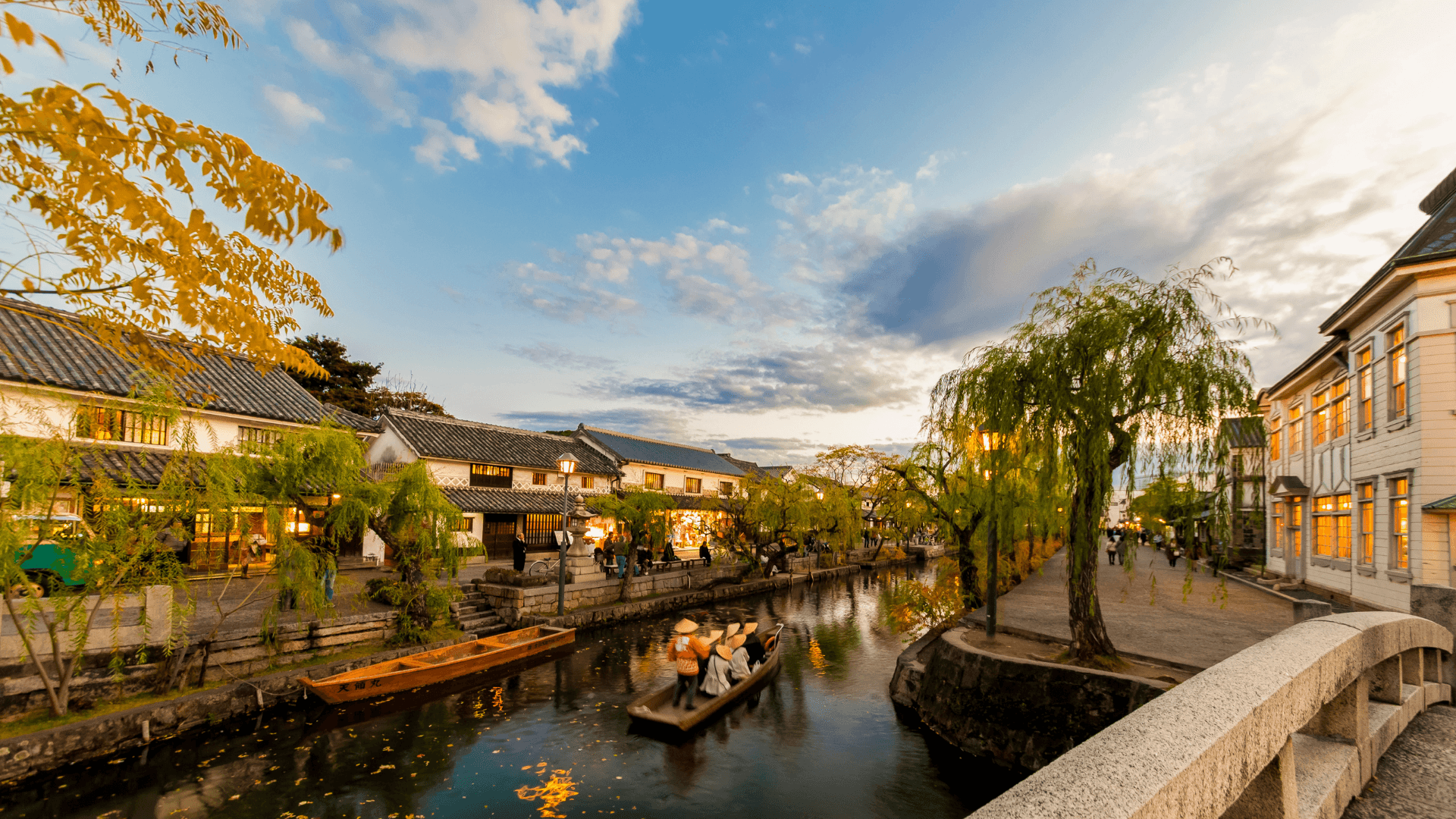
The two cities offer different experiences. In Okayama, Korakuen and the neighbouring castle area provide a natural focus. Kurashiki’s appeal centres on its canal, former merchant buildings, small streets and art collections. The mistake is treating their short rail connection as proof that every major attraction can fit between a late-morning arrival and an early-afternoon departure.
How Much Time?
With roughly four to five hours between trains at Okayama Station, choose one sightseeing area. Korakuen is the more straightforward option if you want to avoid another railway journey. Kurashiki can also work as a selective stopover, but allowing five to six hours gives more room for its additional train journey, walks and a meal. These windows include returning to Okayama Station, not just time at the attractions.
For both cities, plan a full day beginning in the morning and ending in the late afternoon. You can visit Ohara Museum, walk through part of Kurashiki’s historic quarter and continue to Korakuen without making the castle interior compulsory. Stay overnight if you want longer museum visits, time in Kurashiki after the main sightseeing hours or a less compressed introduction to the area. An extra night should protect something you value, rather than simply add another destination to your booking list.
Understand The Stations
Okayama Station and Kurashiki Station are connected by local JR services. Kurashiki’s official tourism website gives approximately 17 minutes for the railway journey, but that is only one part of the transfer. You still need to find the platform, wait for the train and walk from Kurashiki Station to the historic quarter. Use the official Kurashiki access guide for the basic connections and JR West’s route finder for services on your date.
Kurashiki Station and Shin-Kurashiki Station are not interchangeable. For the historic quarter, Kurashiki Station is the usual local-rail arrival point. Shin-Kurashiki is a separate Shinkansen station requiring an onward connection. From the Osaka direction, changing at Okayama generally provides a straightforward approach; from the Hiroshima direction, compare the available connections rather than assuming the same interchange is always best. Kurashiki Ivy Square’s official access instructions explain the different approaches and place the property, within the historic quarter, approximately 15 minutes on foot from Kurashiki Station’s south exit.
A sightseeing stopover also needs the correct railway ticket. The standard smartEX service does not permit breaking a through-journey for sightseeing and then resuming the unused section. If you intend to leave the station at Okayama, arrange the journeys accordingly or ask the ticket issuer about suitable ticket options before purchasing. Do not assume that a Tokyo–Hiroshima reservation automatically includes a sightseeing break in between. See the official smartEX conditions.
Handle Luggage First
For a same-day visit that starts and ends at Okayama Station, leaving your suitcase there is usually simpler than carrying it between sightseeing areas. Nekonote Station is near the Shinkansen gates on the station’s second floor. Its official listing currently gives storage hours of 8 a.m.–8 p.m., with charges of ¥600 for qualifying bags up to 120 cm in combined dimensions and 15 kg, or ¥800 up to 160 cm and 25 kg. Confirm acceptance for larger items and leave time for collection. Official luggage-storage information.
The same location offers a separate ¥1,500 delivery service to participating accommodation in Okayama and Kurashiki. Bags must be handed over by 1:30 p.m., with delivery expected around 5 p.m.; not every property participates. This can help when you are sightseeing before a Kurashiki overnight, but keep medication, valuables and anything needed during the afternoon with you. Check the eligible-property list through the official service page.
Choose storage around where you will finish. If your bag is in Okayama, the itinerary must bring you back there, even if another station would otherwise suit your onward train. Likewise, do not treat the storage counter’s closing time as a sensible collection target. Allow for queues and the separate journey from the counter to your departure platform.
A Short Stopover
Choose Okayama for a garden-focused visit. After dealing with luggage, travel to Korakuen and allow approximately 75–90 minutes to explore at an unhurried walking pace. The garden’s official website estimates about 12 minutes by bus or 25 minutes on foot from Okayama Station, excluding waiting and navigation. Check the garden’s access instructions rather than choosing transport solely from the quickest time shown on a map.
With four to five hours available, a nearby meal and a short look at the castle exterior may also fit. Keep the castle interior optional: adding another substantial visit is different from walking past the building. Work backwards from your onward train, including luggage collection, and decide when you must leave the sightseeing area before you begin. If the incoming train is late, remove the optional addition rather than rushing the garden and lunch.
Choose Kurashiki for historic streets or art. Starting from Okayama Station, allow roughly five to six hours for the return railway journey, walks, sightseeing and food. Decide whether the visit is primarily about Ohara Museum or the neighbourhood. A museum-led visit needs a shorter canal walk; a streets-focused visit leaves more time for browsing, a café and the merchant streets beyond the most photographed stretch. The official Bikan Historical Area guide helps distinguish the museums and buildings instead of treating the entire district as one attraction.
Check the museum calendar before making it the centre of a short stopover. Ohara Museum’s standard hours are 9 a.m.–5 p.m. from March to November and 9 a.m.–3 p.m. from December to February, with last admission 30 minutes before closing. Regular Monday closures have exceptions, and individual buildings can have different hours. Arriving shortly before last admission is not equivalent to having enough time for the collection. Consult the museum’s current visitor information.
One Full Day
The following Okayama and Kurashiki itinerary starts at Okayama Station around 8:30 a.m. and aims to return around 5 p.m. It assumes Ohara Museum is open and that you are comfortable with several walking sections. The clock times are planning targets, not confirmed departures. If you need longer walking breaks or want extensive time in each gallery, use the overnight version instead.
8:30–9:30 a.m.: store luggage and travel to Kurashiki. Take a suitable local train, leave Kurashiki Station by the south side and walk towards the historic quarter. Keep the first hour for getting there rather than adding shopping at the station. The purpose of starting in Kurashiki is to protect the museum visit, particularly in winter, when its early closing time makes a late-afternoon arrival unsuitable.
9:30 a.m.–1 p.m.: visit the museum, explore nearby streets and have lunch. Allocate approximately two hours to selected museum galleries, adjusting for your interest rather than trying to complete every room. Afterwards, spend around 45 minutes walking by the canal and through nearby streets, then eat within the neighbourhood. This gives the morning more variety than moving immediately from the museum to another train. If the museum takes longer, shorten the browsing time or choose a simpler lunch; do not silently push the whole afternoon backwards.
1–3:45 p.m.: return to Okayama and visit Korakuen. Allow approximately 75 minutes to walk back to Kurashiki Station, take the train and continue from Okayama Station to the garden. This is deliberately longer than the railway journey alone. Aim to reach Korakuen around 2:15 p.m., leaving about 90 minutes to explore. Current standard closing time is 6 p.m. from 20 March to 30 September and 5 p.m. from 1 October to 19 March. Check the official garden hours, especially when changing the route for winter.
3:45–5 p.m.: keep the final stop optional and return. If time and energy allow, continue towards the castle for an exterior view before returning to the station. The full castle interior is not included in this example. Aim to finish luggage collection before preparing for your onward train, rather than booking a departure that requires the final transfer to run perfectly. If the day has slipped significantly, remove the castle stop first. If a worthwhile garden visit is no longer realistic, staying longer in Kurashiki may be better than crossing between cities for a hurried final entry.
When To Stay
An overnight is useful when you want to experience both cities without giving either only the time left over. One arrangement is to visit Korakuen and the castle on the first afternoon, continue to Kurashiki for the night, then explore the historic quarter and museum the following morning. Check the calendar before choosing this order: an overnight does not help if your main museum visit falls on a closed day.
Staying near Okayama Station makes sense when onward rail travel is the stronger priority. Staying near Kurashiki’s historic quarter makes more sense when you want an evening walk and an easy start there the next morning. Neither choice is automatically cheaper, and a property described as “in Kurashiki” may not be near the canal. Compare its actual location, luggage arrangements and dinner options. Once you have chosen the base, the guide to when to book hotels in Japan can help you assess booking timing and cancellation flexibility.
If Naoshima is also part of the trip, give the island its own sightseeing day. Its museum reservations and transport require a different schedule from mainland sightseeing; check Benesse Art Site’s ticket information before fixing the sequence. Allowing one mainland day and one island day is a useful starting point, but two hotel nights do not guarantee two complete days if you arrive late or depart early.
Food Along The Route
Lunch should add something local without forcing a detour. Okayama barazushi is a regional version of scattered sushi, typically combining seafood and seasonal vegetables over rice. Demi-katsudon is a pork-cutlet rice bowl served with demi-glace sauce. The tourism authority’s barazushi guide and demi-katsudon guide provide background and places to investigate, but restaurant opening times and current menus still need checking.
For the combined-day route, lunch in or near Kurashiki’s historic quarter is the simplest fit. Save an Okayama-specific restaurant for dinner if you are staying there, rather than travelling back early and then returning to unfinished sightseeing. If a chosen restaurant has a long queue, use a nearby alternative. A regional meal is worthwhile, but it should not leave you reaching the garden just before closing.
What It Costs
For one adult paying standard admission, the example below covers Ohara Museum, Korakuen, lunch, refreshments and an allowance for the local journeys. It does not include the long-distance journey to Okayama. Food and transport figures are planning allowances, not verified package prices or a quotation for particular trains.
| Expense | Cost or allowance |
|---|---|
| Ohara Museum admission | ¥2,000 |
| Korakuen admission | ¥500 |
| Lunch, a drink and a snack: allowance | ¥1,500–¥2,500 |
| Local rail and bus/tram journeys: allowance | ¥1,000–¥1,500 |
| Planning total before luggage storage | ¥5,000–¥6,500 |
| Optional qualifying luggage storage | ¥600–¥800 |
Admission prices are listed by Ohara Museum and Korakuen. The garden currently lists a qualifying garden-and-castle combination ticket at ¥800, which would add ¥300 to the example if you replace garden-only admission. Buy it because you intend to visit the castle interior and have allowed enough time, not simply because the difference looks small.
Your actual transport spending depends on the services used, how much you walk and any existing ticket coverage. Check it separately rather than treating the allowance as a fare. The total also excludes breakfast, dinner, accommodation, shopping, extra attractions and taxis. For the rest of your trip, use the Japan travel budget breakdown to account for the additional hotel nights and intercity journeys that this regional visit creates.
Conclusion
Choose Okayama for a straightforward garden-focused stopover, Kurashiki for historic streets and art, or a full day for a selective combination of both. Stay overnight when it gives you time for something specific that the shorter visit would sacrifice. The most useful itinerary is not the one that includes every nearby attraction, but the one that leaves enough time to enjoy the places you deliberately chose.
Frequently Asked Questions (FAQs)
Do you need a car for Okayama and Kurashiki?
No, not for the station, garden, museum and historic-quarter visits described here. The route uses trains, local transport and walking. A car becomes a separate consideration when your plans extend into places outside this article’s scope; it should not be added simply because you are visiting a smaller Japanese city. If walking distance is the concern, assess the individual transfers and attraction access first. A taxi can shorten a particular journey, but it does not remove the walking within the garden or historic district.
Is Kurashiki worthwhile without visiting Ohara Museum?
Yes, if historic streets, architecture, shops and a slower neighbourhood visit appeal to you. In that case, allow the canal and surrounding lanes to be the main experience rather than replacing the museum with several unrelated attractions. You may also need less time than the museum-led itinerary. If art is the principal reason for your visit and the museum is closed, changing dates may be more satisfying than expecting a streets-only visit to offer the same experience.
How should you change the itinerary in sustained rain?
Shorten the outdoor sections and decide whether travelling between both cities still adds value. On an open day, a longer museum visit and a nearby meal can make Kurashiki the more practical focus, though the walks between buildings remain exposed. Light rain may still suit a garden visit if you are comfortable outdoors; persistent heavy rain can make the combined schedule unnecessarily tiring. Check current conditions and transport notices, and do not use “rainy-day alternative” to imply that the entire route is indoors.
Disclosure: This post may contain affiliate links.


Compare prices across top platforms in seconds.