Hiroshima and Miyajima in One Day or Two?
A Realistic Route Guide
Introduction
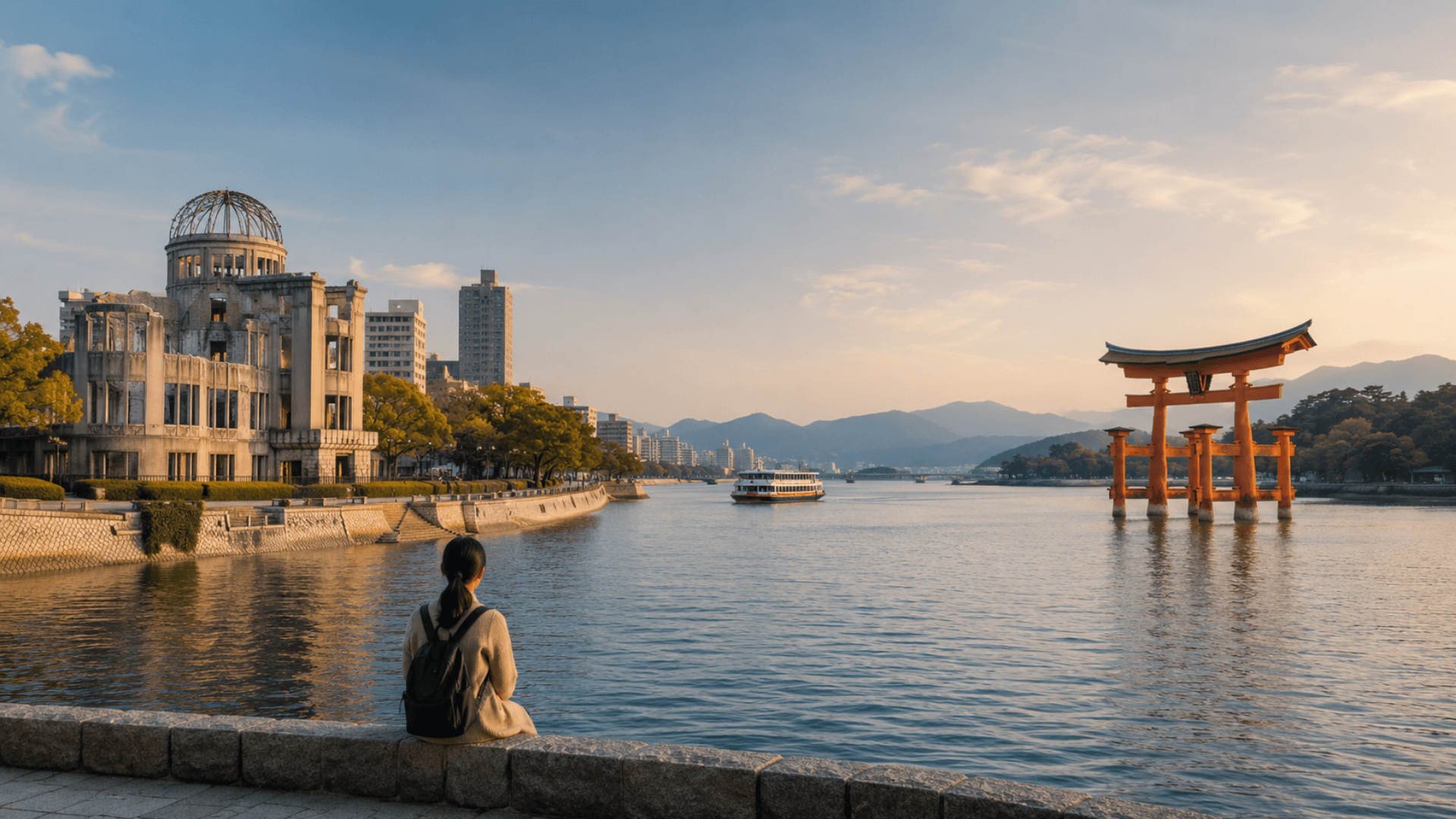
Hiroshima and Miyajima are often combined because their headline attractions appear close together on a map. Hiroshima provides the Peace Memorial Museum, Peace Memorial Park and Atomic Bomb Dome, while Miyajima is known for Itsukushima Shrine and the torii gate standing in the sea.
It is technically possible to see the core sites in one day. The more important question is whether the resulting pace gives the Peace Memorial Museum enough time, allows for transport delays and leaves Miyajima feeling like a destination rather than an afternoon photo stop.
For most first-time visitors, two days and one night is the stronger choice. One day works when you are already staying in Hiroshima, reserve the museum appropriately and accept a strict cut line.
Quick Verdict: One Day or Two?
Choose one day if your itinerary is short, you only want the essential sites and you are prepared to skip Mt Misen, the ropeway, the aquarium and extended island exploration.
Choose two days if the Peace Memorial Museum is important to you, you want a calmer Miyajima visit or you are travelling from Osaka or Kyoto. Two days also provide more protection from ferry queues, changing tides, heat, rain and attraction closures.
| Traveler situation | Recommended duration | Main reason |
|---|---|---|
| Staying in Hiroshima the previous night | One long day can work | You can begin before day-trippers arrive |
| Day trip from Osaka | Possible, but compressed | Around 90 minutes each way from Shin-Osaka |
| Day trip from Kyoto | Possible, but less efficient | Additional Kyoto–Shin-Osaka considerations |
| First visit with museum priority | Two days | Allows respectful museum time |
| Visiting Mt Misen or using the ropeway | Two days | Too much pressure in a combined day |
| Travelling with children or a group | Two days | Meals and transfers take longer |
| Continuing west toward Fukuoka | One night in Hiroshima | Fits naturally into the rail direction |
Why One Day Is More Demanding Than It Looks
The route contains three different experiences: a major historical museum, a city memorial district and an island reached by ferry. Each requires a different pace.
The official Hiroshima tourism organization publishes a one-day World Heritage route covering the Atomic Bomb Dome, Peace Memorial Museum and Miyajima. This confirms that the combination is possible, but the listed attraction time does not include every queue, meal, missed connection or period a visitor may need after the museum. Review the official one-day World Heritage course.
The museum should not be treated as a box to check before rushing to the ferry. Its exhibits require attention, and many visitors appreciate time afterward to walk through Peace Memorial Park without immediately watching the clock.
Miyajima also extends beyond the torii gate. Itsukushima Shrine, Daisho-in, the shopping street, waterfront and Mt Misen can easily occupy most of a day when approached at a comfortable pace.
Can You Visit Hiroshima and Miyajima in One Day From Osaka?
A Hiroshima and Miyajima day trip from Osaka is possible, but it requires an early start and a disciplined route. JNTO estimates approximately 90 minutes from Shin-Osaka to Hiroshima by Shinkansen. That estimate does not include reaching Shin-Osaka from your hotel or navigating Hiroshima after arrival. See JNTO’s official Hiroshima access guidance.
If your Osaka hotel is near Shin-Osaka, the day is more manageable. If you are staying in Namba, Shinsaibashi or another southern district, add the morning transfer to Shin-Osaka before evaluating the schedule.
A sensible Osaka day trip should concentrate on the Peace Memorial Museum, Peace Memorial Park, Atomic Bomb Dome and the central area of Miyajima. It should not also attempt Mt Misen, the aquarium, Hiroshima Castle and an elaborate evening meal.
The last journey of the day matters as much as the first. Check the Shinkansen you intend to use home before leaving Osaka and keep an alternative service saved. The goal is not merely to reach Hiroshima early but to avoid turning the final hours on Miyajima into a constant fear of missing the train.
What About a Day Trip From Kyoto?
A day trip from Kyoto creates slightly more transport friction. JNTO planning information places the Kyoto-to-Hiroshima journey at roughly one hour and forty minutes on faster Shinkansen connections, but the ticket or pass conditions need attention. See the official Setonaikai access guidance.
The JR West Kansai-Hiroshima Area Pass covers the Sanyo Shinkansen between Shin-Osaka and Hiroshima. It does not cover the Tokaido Shinkansen between Kyoto and Shin-Osaka, so pass users generally need to use a covered local or rapid service to reach Shin-Osaka first. Check the current JR West pass coverage.
This does not make the trip impossible, but it weakens the idea that Kyoto and Osaka are identical starting points. If Hiroshima is a major priority, an overnight stay is usually the more satisfying use of the journey.
A Realistic One-Day Hiroshima and Miyajima Itinerary
This route works best when you sleep in Hiroshima the night before. Travelers arriving from Osaka should shift the morning later and reduce the Miyajima section accordingly.
7:30–9:30: Peace Memorial Museum
Begin at the Hiroshima Peace Memorial Museum if a suitable reservation is available. Current official guidance lists opening from 7:30, with seasonal closing times, and some periods or admission windows require advance reservations. Adult admission is currently ¥200. Check current hours and reservation requirements.
Allow at least 90 minutes. Two hours is better if the museum is one of the principal reasons for your visit. Avoid placing another reservation immediately afterward because the experience should not be rushed.
9:30–10:45: Peace Memorial Park and Atomic Bomb Dome
Walk through the park after the museum rather than treating it as a separate photo stop. This order gives context to the memorials and provides time to process the exhibitions before moving into the next part of the day.
The Atomic Bomb Dome is across the river and can be included naturally. Keep the visit focused rather than adding distant city attractions.
10:45–12:00: Travel Toward Miyajima
The most seamless option from the Peace Park area can be the World Heritage Sea Route, which the official one-day itinerary estimates at approximately 45 minutes. It reduces backtracking toward Hiroshima Station, but schedules and fares should be checked directly before relying on it.
The more conventional route is to reach Hiroshima Station, take the JR Sanyo Line to Miyajimaguchi and board a ferry. Itsukushima Shrine’s official access information estimates roughly 30 minutes from Hiroshima Station to Miyajimaguchi and another 10 minutes by ferry. Check official Miyajima access information.
12:00–13:00: Lunch on Miyajima
Use lunch as part of the route rather than an attraction that requires another detour. Hiroshima is known for oysters and anago, or conger eel, while momiji manju works well as a smaller snack.
Queues can be substantial at famous restaurants. On a one-day route, choose a suitable meal with a manageable wait rather than allowing one restaurant to consume the island visit.
13:00–14:00: Itsukushima Shrine and Waterfront
Itsukushima Shrine currently opens at 6:30 throughout the year, with closing times changing by season. Adult admission is ¥300. Verify the latest shrine hours and admission fees.
The shrine’s appearance changes with the tide. At higher tide, the structures and torii appear to float; at lower tide, visitors may be able to walk closer to the gate. Neither condition is universally better, so choose according to the experience you value.
14:00–16:00: Daisho-in or the Town Area
After the shrine, choose one secondary direction. Daisho-in offers a quieter temple experience, while Omotesando provides shops, snacks and an easier route back toward the ferry.
Do not attempt the ropeway merely because time appears available on paper. Reaching the ropeway, waiting, travelling up and returning can consume the remaining island window. The Miyajima Ropeway official site should be checked for operating status because maintenance and weather can suspend service.
16:00–17:00: Ferry and Return Journey
Begin the return before the itinerary becomes dependent on the final practical connection. If you are returning to Osaka or Kyoto, allow enough time to reach Hiroshima Station, collect luggage and find the correct Shinkansen platform.
If Hiroshima is your overnight base, the evening can remain flexible. Return for okonomiyaki, take a short city walk or rest after a demanding day.
When Should You Reverse the One-Day Order?
Miyajima first can be better when the morning tide produces the view you want, the museum reservation is only available later or you want to reach the island before the largest day-trip groups.
The Miyajima Tourist Association publishes tide information and explains that the torii can often be approached when the listed tide height is below approximately 100 centimeters. The shrine tends to appear floating when the tide is above roughly 250 centimeters. Actual conditions and timing still vary, so use this as planning guidance rather than a guarantee. Check the official Miyajima tide table.
Do not reverse the route solely for a photograph if doing so creates a poor museum schedule. For most first-time visitors, a reserved museum visit and workable transport sequence should remain the higher priority.
What Must Be Removed From the One-Day Route?
Mt Misen and the ropeway
The mountain deserves several hours when walking, waiting and weather are considered. Keep it for a two-day itinerary unless it is your main reason for visiting Miyajima.
Miyajima Public Aquarium
The aquarium can be worthwhile for families, but it competes directly with the shrine, temples and island atmosphere. It does not fit comfortably into a first one-day combined route.
Hiroshima Castle main keep
The reconstructed main keep closed permanently on March 22, 2026. The surrounding grounds and Ninomaru area may still be visited, but do not follow older itineraries that assume entry to the tower. See Hiroshima City’s official closure notice.
Multiple museums
The Peace Memorial Museum should remain the primary museum for a first visit. Adding several indoor attractions makes the route feel like a race and reduces the time available for the memorial park and island.
A rigid restaurant reservation
A reservation can work near your hotel after returning, but a tightly timed meal between the museum and ferry makes the most important part of the day unnecessarily fragile.
The Better Two-Day Hiroshima and Miyajima Itinerary
Two days separates the historical and island experiences. It also gives travelers enough room to adapt the order around weather, tides and museum reservations.
Day 1: Hiroshima City and Peace Memorial District
Arrive in Hiroshima by late morning if travelling from Kansai. Leave large luggage at your hotel or use an official station storage service before continuing into the city.
Spend the late morning and early afternoon at the Peace Memorial Museum, Peace Memorial Park and Atomic Bomb Dome. Two to three hours is a more realistic combined allowance than attempting to move through the district at sightseeing speed.
For lunch or dinner, try Hiroshima-style okonomiyaki. The regional version layers noodles, cabbage and other ingredients rather than mixing everything into one batter. JNTO also highlights oysters as a major local specialty. Read JNTO’s official Hiroshima overview.
If energy remains, add Shukkeien rather than crossing the city for multiple attractions. The garden currently charges ¥350 for adults and operates seasonal hours. Check Shukkeien’s official tourism listing.
Keep the evening simple. A two-day route works because it protects energy rather than using the extra night to create another full checklist.
Day 2: Miyajima at a Calmer Pace
Travel to Miyajima early enough to experience the waterfront before the busiest part of the day. Check the tide table, but do not treat the tide as the only factor determining the schedule.
Begin with Itsukushima Shrine, then continue to Daisho-in and the town area. Have anago, oysters or another local lunch without the pressure of immediately returning to Hiroshima.
If the weather is clear and the ropeway is operating, the second day gives you enough room to consider Mt Misen. The normal ropeway hours are currently listed as 9:00 to 16:00, with the final return around 16:30, but closures and seasonal changes are possible. Confirm current ropeway fares and operating hours.
Return to Hiroshima for another night or continue west toward Fukuoka. If travelling back to Kansai, keep the late afternoon clear enough to reach Hiroshima Station without rushing.
Where Should You Stay?
Hiroshima Station
The station area is the most practical base for travelers arriving and departing by Shinkansen. It simplifies luggage storage, early departures and the JR journey toward Miyajimaguchi.
The tradeoff is that the Peace Memorial district and central evening areas require a tram or bus journey. This is usually acceptable for a short operational stay.
Central Hiroshima or the Peace Park Area
A central base is stronger for walking to the memorial district, restaurants and evening streets. It can make Day 1 calmer because you are not repeatedly returning to Hiroshima Station.
The tradeoff is additional transport when arriving, departing or visiting Miyajima through the JR route.
Miyajima
Staying on Miyajima offers the most atmospheric experience, especially after day-trip crowds leave. It also creates more luggage and ferry planning, and accommodation can be more expensive.
For most first-time visitors on a broader Japan route, Hiroshima Station or central Hiroshima is the better balance. Choose Miyajima overnight when the island itself is a major trip priority.
Hiroshima to Miyajima Transport Options
| Route | Best for | Planning consideration |
|---|---|---|
| JR train and JR ferry | Speed from Hiroshima Station | Approximately 30 minutes by train plus ferry time |
| Hiroden streetcar and ferry | Slower sightseeing journey | Current timetable is around 66 minutes to Miyajimaguchi |
| World Heritage Sea Route | Moving directly from Peace Park | Convenient but check fare and schedule |
| Guided day tour | Travelers wanting transfers coordinated | Less flexibility and usually higher cost |
The JR Miyajima Ferry currently charges ¥200 each way for adults, with a separate ¥100 visitor tax collected when entering Miyajima. The ferry accepts eligible JR and JR West passes, subject to current conditions. Check the official JR ferry information and current fare page.
Hiroshima’s streetcar adult flat fare is currently ¥240. If you expect several rides and a ferry journey, compare individual fares with the available visitor passes. Check current Hiroden fares.
Is the Kansai-Hiroshima Area Pass Worth Considering?
The current five-day Kansai-Hiroshima Area Pass costs ¥17,000 for an adult. It covers reserved seats on the Sanyo Shinkansen between Shin-Osaka and Hiroshima, eligible local trains and the JR West Miyajima Ferry.
It does not cover the Tokaido Shinkansen between Kyoto and Shin-Osaka. Travelers starting in Kyoto need to understand that limitation rather than assuming every Shinkansen segment is included.
The pass becomes more attractive when Hiroshima is part of a multi-day Kansai route rather than a standalone return trip. Compare it with the journeys already in your itinerary instead of adding travel merely to justify the pass.
Realistic Budget
The figures below are planning ranges, not official package prices. They assume normal meals and exclude major shopping.
| Route style | Estimated cost | What it covers |
|---|---|---|
| One day while already in Hiroshima | ¥5,000–¥9,000 | Local transport, ferry, basic admissions and food |
| Day trip from Kansai using a regional pass | ¥21,000–¥27,000 | Pass, admissions, food and local extras |
| Two days with a Hiroshima hotel | ¥30,000–¥50,000+ | Kansai transport, hotel, local transport, food and admissions |
| Two days with a Miyajima stay | ¥40,000+ | Higher accommodation and island dining costs |
Hiroshima Prefecture introduced an accommodation tax on April 1, 2026. The current rate is ¥200 per person per night when the pre-tax accommodation fee reaches the applicable ¥6,000 threshold. Check the official accommodation-tax guidance.
If you are building the complete trip budget, use my Japan travel budget breakdown to compare accommodation, rail, food and sightseeing costs across the broader route.
One Day Is Best for These Travelers
A one-day itinerary suits travelers who are already based in Hiroshima, have limited annual leave and accept that they are visiting the essential sites rather than exploring both destinations fully.
It can also work for experienced independent travelers who understand Japanese rail systems and can adjust quickly if a connection or reservation changes.
The route is less suitable for visitors who dislike early starts, want to hike Mt Misen, need a slow museum pace or are travelling with people who require regular rest and meal breaks.
Two Days Is Best for These Travelers
Two days is the better choice for most first-time visitors, solo travelers who do not want to monitor every connection and groups whose movement naturally takes longer.
It is also stronger when Hiroshima forms part of a westward extension after Kyoto or Osaka. Instead of making a long return day trip, stay one night and continue in the same direction.
If you are still deciding the broader city sequence, my guide to whether Tokyo or Kyoto should come first can help establish the route before Hiroshima is added.
For an itinerary that extends beyond the core Tokyo–Kyoto–Osaka corridor, the Japan 8–14 Day Core Route Bundle provides a structured way to evaluate regional additions without overloading the trip.
Important Checks Before Travelling
Check the Peace Memorial Museum reservation calendar before finalizing the island order. Certain admission periods require reservations, and the official tourism site announced reservation requirements for August 8–16, 2026. Review current museum notices.
Check the shrine hours and tide table separately. A favorable tide is not useful if the route reaches the shrine after admission closes.
Check the ropeway on the day of travel. Maintenance, wind and other weather conditions can affect operation even when it appears in the original itinerary.
Finally, save the return train and at least one alternative. This small preparation prevents the final island hour from becoming unnecessarily stressful.
Final Verdict
Hiroshima and Miyajima can be visited in one day, especially if you sleep in Hiroshima the previous night and limit the route to the Peace Memorial Museum, Peace Park, Atomic Bomb Dome and central Miyajima.
Two days is still the stronger recommendation for most first-time visitors. It provides enough time to engage properly with Hiroshima’s history, experience Miyajima beyond the torii gate and adjust the route around tides, weather and transport.
If Hiroshima is important enough to add to your Japan trip, it is usually important enough to give one night.
Frequently Asked Questions
Can Hiroshima and Miyajima be visited in one day?
Yes, but it will be a long and structured day. Prioritize the Peace Memorial Museum, Peace Park, Atomic Bomb Dome and Itsukushima Shrine, and remove Mt Misen, the aquarium and secondary city attractions.
Should I visit Hiroshima or Miyajima first?
Visit Hiroshima first when you have an early museum reservation or want to prioritize the historical sites. Visit Miyajima first when the morning tide is important or the museum reservation is later.
Is Hiroshima worth an overnight stay?
Yes. One night separates the museum and island visits, reduces transport pressure and allows you to experience Hiroshima’s food and evening atmosphere.
Is a Hiroshima day trip from Osaka worth it?
It can be worthwhile when one day is genuinely all you have. However, expect approximately 90 minutes of Shinkansen travel in each direction from Shin-Osaka, plus city and ferry transfers.
How long should I spend on Miyajima?
Allow at least four hours for the shrine, waterfront, Daisho-in and lunch. Allow most of a day if you want to use the ropeway or explore Mt Misen.
Can I use the Japan Rail Pass on the Miyajima ferry?
Eligible JR passes can be used on the JR West Miyajima Ferry, but the separate Miyajima visitor tax may still apply. Confirm the current conditions before travel.
Is Miyajima better at high or low tide?
High tide creates the floating-shrine appearance. Low tide may allow visitors to walk closer to the torii gate. Both are worthwhile, so choose according to the experience you prefer.
Where should I leave luggage in Hiroshima?
Hiroshima Station offers luggage storage and delivery services. Availability and charges can change, so consult the official Hiroshima luggage guidance before relying on a particular counter.
Disclosure: This post may contain affiliate links.


Compare prices across top platforms in seconds.