
Solo Travel Packing Checklist for Beginners
Step-by-Step Guide
IIntroduction
Packing for your first solo trip can feel more stressful than it should.
When you travel with other people, small mistakes are easier to absorb. Someone else may have a charger, medicine, spare cash, or an extra pair of hands when you need to repack in a hurry. When you travel alone, your bag becomes your backup system. That does not mean you need to pack for every possible disaster, but it does mean your packing should be intentional.
A good solo travel packing checklist is not about bringing the most items. It is about bringing the right items in the right places, so your trip feels easier once you are actually moving.
This guide covers what to pack for a first solo trip, how to think about luggage, which items belong in your carry-on, what to leave behind, and how to avoid overpacking without removing things that genuinely protect your comfort, safety, or health.
Quick Answer: What Should You Pack for a Solo Trip?
For most first-time solo travelers, the essentials are documents, money access, practical clothing, toiletries, medication, mobile data, chargers, basic safety backups, and luggage that you can comfortably manage on your own.
The most important packing rule is simple: pack for your confirmed trip, not every imagined emergency.
A strong solo travel packing setup should help you move easily, access important items quickly, and handle small problems without needing someone else to rescue the day. That usually means fewer clothes than beginners expect, more attention to documents and backup access, and a smarter carry-on setup.
Why Packing Matters More When You Travel Alone
Solo travel does not require extreme minimalism, but it does reward good organization.
When you are alone, you are the person carrying every bag, watching every item, reading every sign, finding every platform, and making every airport decision. Heavy or disorganized luggage makes all of that harder. A bag that feels manageable at home can feel very different after stairs, cobblestones, crowded trains, or a long walk to accommodation.
Packing well reduces friction. It helps you move through airports faster, avoid baggage stress, keep your essentials accessible, and feel more confident in unfamiliar places.
The goal is not to pack as little as possible. The goal is to pack so that your luggage supports the trip instead of becoming another thing you have to manage.
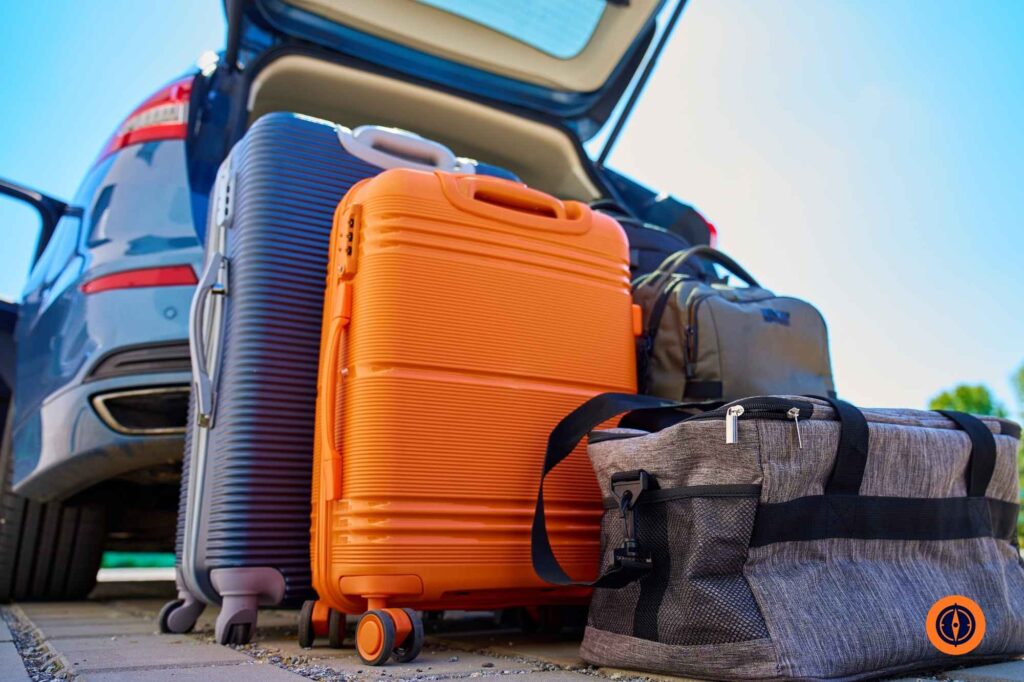
Start With the Trip, Not the Bag
Before choosing what to pack, look at the actual trip you are taking.
A city break with one hotel does not need the same packing strategy as a multi-city trip with trains and several check-ins. A tropical destination does not need the same clothing logic as winter in Japan or Europe. A hostel stay may require a towel, lock, and shower sandals, while a hotel stay may already cover those basics.
Ask yourself what kind of movement the trip requires. Will you carry luggage on public transport? Will you move cities? Will you need to walk from a station to your hotel? Will you have laundry access? Are you staying somewhere with basic toiletries, towels, or a hair dryer?
This is where many beginners overpack. They pack for uncertainty instead of checking what the trip actually requires.
Documents and Money Essentials
Your documents should never be buried deep inside your main luggage.
For a solo trip, keep your most important documents in a secure but easy-to-access place. Your passport, visa or entry authorization, flight details, accommodation address, travel insurance details, and emergency contacts should be available even if your phone battery dies.
It is also worth keeping digital and offline copies of important documents. The CDC’s Pack Smart guidance recommends carrying copies of key travel and health documents, including travel documents, lodging details, prescriptions, and insurance information.
For money, avoid relying on one card or one wallet. Keep a primary card with you, a backup card somewhere separate, and a small amount of emergency cash. This is not about fear. It is about making sure one lost wallet does not become a full travel crisis.
Clothing Strategy: Pack by Function
Clothing is where most first-time solo travelers overpack.
Instead of packing a different outfit for every day, pack pieces that work together. A simple clothing system usually beats a suitcase full of “maybe” outfits. For a one-week trip, many travelers can manage with a small rotation of tops, two or three bottoms, one useful layer, comfortable walking shoes, sleepwear, underwear, and socks.
The exact number depends on climate and laundry access, but the principle stays the same: pack clothing by function, not anxiety.
Choose clothes you already know are comfortable. Avoid new shoes, fussy fabrics, and items that only work in one specific situation. The best travel clothes are usually the ones you can wear repeatedly without thinking too much.
Layering is more useful than packing bulky backups. A light base layer, a mid-layer, and a weather-appropriate outer layer will usually serve you better than several heavy items.
Toiletries and Medication
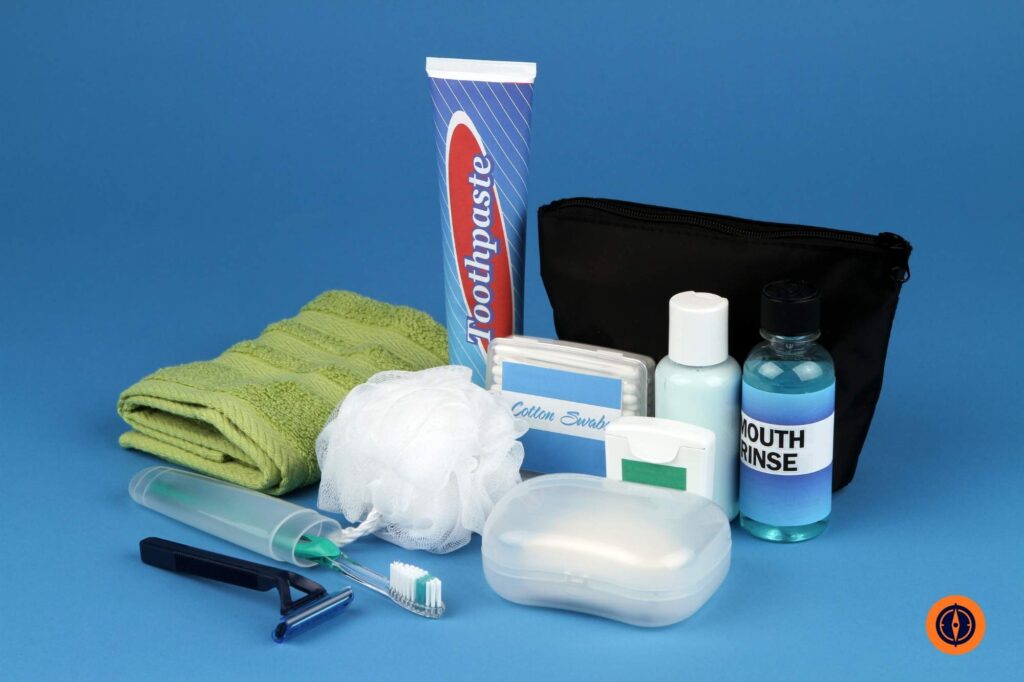
Toiletries should be practical, not a full bathroom cabinet.
For short trips, travel-size products or refillable containers are usually enough. If you are flying with carry-on luggage, remember that the TSA’s liquids rule limits liquids, aerosols, gels, creams, and pastes to containers of 3.4 ounces or 100 milliliters or less, placed in a quart-sized bag. Rules can vary by country and airport, so always check your airline and departure airport too.
Medication deserves more care than ordinary toiletries. The CDC recommends packing prescription medicines in their original, labeled containers and bringing enough for the whole trip, plus extra in case of delays. Their guidance on traveling abroad with medicine also notes that some countries restrict certain medications, so check destination rules before you travel.
For a basic health kit, think in terms of small problems: pain relief, stomach medicine, motion sickness tablets if needed, plasters, hand sanitizer, and any personal medication you already use. You do not need to carry a pharmacy, but you should be able to handle the first small issue without searching for help immediately.
Tech and Connectivity
Your phone is one of your most important solo travel tools.
It holds maps, bookings, payment apps, translation tools, emergency contacts, and directions back to your accommodation. That means your tech packing should focus less on gadgets and more on keeping your core systems working.
Bring your phone charger, a universal adapter if needed, a power bank, earphones, and any device-specific cables you rely on. If you use a power bank, pack it in your carry-on. The FAA says spare lithium batteries and power banks must be carried in carry-on baggage only, not checked luggage, and their PackSafe lithium battery guidance explains the battery limits and short-circuit precautions.
Before departure, download offline maps, save accommodation details, enable two-factor authentication, and make sure you can access important bookings without mobile signal. Mobile data also matters. For many solo travelers, an eSIM is one of the easiest ways to reduce arrival stress because you can set it up before landing.
Safety and Backup Items
Safety packing is about making small problems easier to solve.
You do not need to fill your bag with fear-based items. Start with the basics: a luggage lock, backup card, emergency cash, copies of documents, a small flashlight or phone light backup if relevant, and emergency contacts stored both digitally and offline.
If you are staying in hostels, a padlock and shower sandals may matter more than a money belt. If you are staying in hotels, the better investment may be a practical location and a reliable phone setup. If you are traveling through multiple cities, luggage organization matters more because you will be packing and unpacking repeatedly.
The best safety item is often not a product. It is separation. Do not keep every payment method, document copy, and emergency item in the same pouch. If one thing goes missing, the rest of your trip should still function.

Carry-On vs Checked Luggage
There is no universal best luggage choice.
Carry-on works well for short trips, city travel, and multi-city routes where mobility matters. It helps you avoid baggage claim, reduces the risk of lost luggage, and makes train or bus transfers easier. The tradeoff is that you must be more disciplined with clothing, liquids, and shoes.
Checked luggage can make sense for longer trips, colder climates, or travelers who know they need more comfort items. It is not automatically wrong. The problem is oversized luggage that you cannot manage alone.
A good question is: can you carry or roll this bag through a station, up a short staircase, and into your accommodation without feeling overwhelmed? If the answer is no, the bag is probably too much for a first solo trip.
How to Organize Your Bag
Packing organization matters because travel days are already mentally busy.
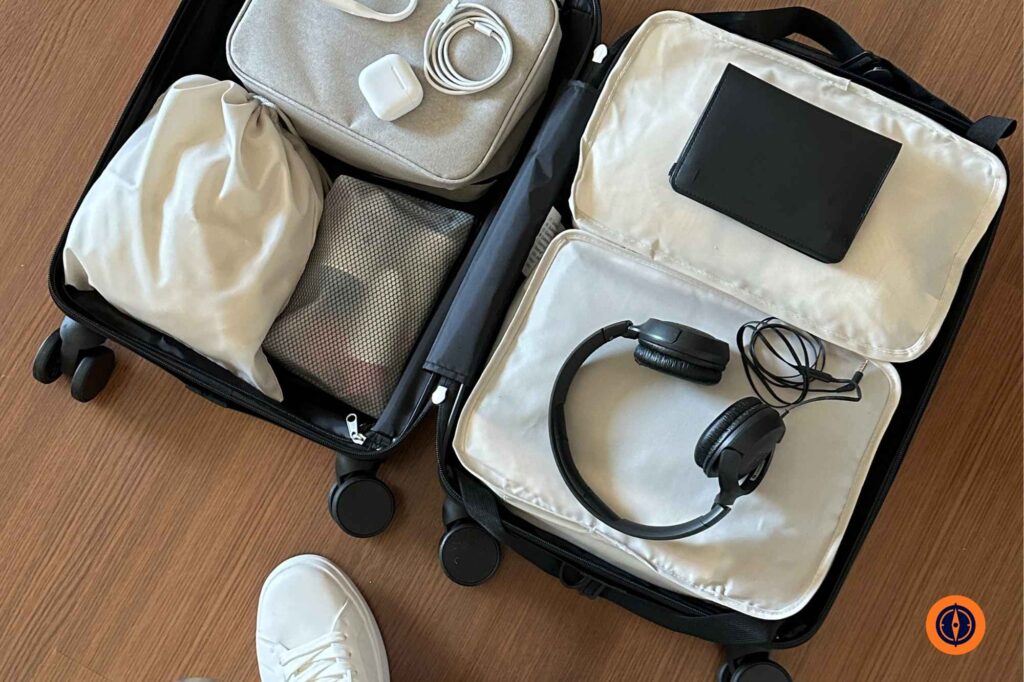
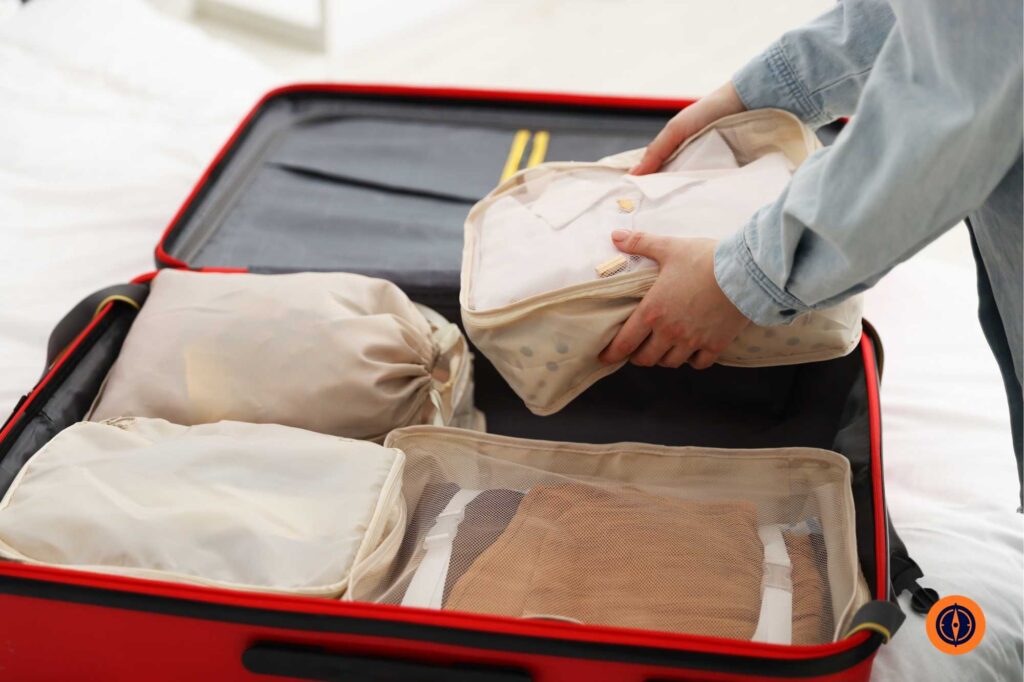
Keep high-access items near the top or in a small personal bag: passport, phone, charger, medication, wallet, boarding pass, and accommodation address. Use a separate pouch for documents and another for tech. A laundry bag keeps worn clothes from taking over the suitcase. Packing cubes can help, but only if they make access easier rather than encouraging you to bring more.
Your airport-day setup deserves special attention. Security, boarding, immigration, and transfers all involve moments where you need items quickly. If you have to open your entire suitcase in public to find a charger or passport, the system is not working.
A well-organized bag should let you move through the first travel day without repeatedly unpacking.
What Not to Pack
Most beginners do not regret leaving behind the third pair of shoes. They regret carrying too much.
The easiest items to cut are things you cannot clearly connect to the actual trip: extra outfits for imaginary occasions, heavy books, full-size toiletries, bulky beauty tools, duplicate gadgets, and clothing that only works in one very specific scenario.
The phrase “just in case” is not always wrong. Medication, backup payment access, and important documents are legitimate just-in-case items. The problem is packing large or heavy items for unlikely situations that could be solved locally if they happened.
Mobility is not a luxury in solo travel. It is part of the experience.
Printable Solo Travel Packing Checklist
Use this as the final review, not the starting point.
Documents and Money
- Passport
- Visa or entry authorization if needed
- Travel insurance details
- Flight and accommodation confirmations
- Emergency contacts
- Primary card and backup card
- Small amount of emergency cash
- Digital and offline document copies
Clothing
- Comfortable tops
- Bottoms that mix and match
- Underwear and socks
- Sleepwear
- Weather-appropriate layer
- Comfortable walking shoes
- Optional secondary footwear
- Laundry bag
Toiletries and Health
- Toothbrush and toothpaste
- Deodorant
- Skincare basics
- Travel-size toiletries
- Prescription medication
- Basic pain relief
- Small first-aid items
- Hand sanitizer
- Sunscreen or insect repellent if needed
Tech
- Phone
- Charger
- Universal adapter
- Power bank in carry-on
- Earphones
- Offline maps
- Booking copies
- eSIM or mobile data plan
Safety and Comfort
- Luggage lock
- Backup card stored separately
- Emergency cash stored separately
- Small daypack
- Reusable water bottle where practical
- Earplugs or eye mask if useful
- Compact umbrella or rain layer if needed
Pre-Departure Packing Review
Do your final review 48 hours before departure.
Lay everything out, remove anything you cannot clearly justify, check the weather one last time, confirm airline baggage rules, and weigh your luggage. If you are flying carry-on only, check liquid limits and battery rules before you leave for the airport.
This review is where you protect yourself from last-minute panic packing. Most extra items added in the final hour are emotional, not practical.
Common Packing Mistakes First-Time Solo Travelers Make
The most common mistake is packing for fear instead of itinerary. Beginners often imagine every possible inconvenience and try to solve all of them with extra items. That usually creates a heavier bag, not a safer trip.
Another mistake is ignoring the travel day. Your airport outfit, personal item, document access, and battery setup matter just as much as what is inside the suitcase.
Many first-time solo travelers also pack too many shoes. Shoes take up space, add weight, and often create the most regret. One comfortable walking pair and one optional secondary pair is usually enough for most beginner trips.
The final mistake is treating packing light as the only goal. Do not remove essential medication, backup access, or weather protection just to feel minimalist. Smart packing is not about having the smallest bag. It is about having the right bag for the trip.
Final Packing Principle
A well-packed bag should make solo travel feel calmer.
It should help you move easily, find important items quickly, handle small problems, and avoid carrying things that add weight without adding value. You do not need a perfect packing list. You need a practical system that matches your destination, trip length, accommodation, and comfort level.
Pack intentionally, keep essentials accessible, and remember that the best luggage is the luggage you can manage confidently by yourself.
FAQs About Solo Travel Packing
Should beginners travel with carry-on only?
Carry-on only can work well for short solo trips, especially city trips or routes with several transport changes. For longer trips, colder climates, or travelers who need more comfort items, a small checked bag may be more practical.
How many outfits should I pack for a week?
Most travelers do not need seven full outfits. A small mix-and-match wardrobe with 4 to 5 tops, 2 to 3 bottoms, underwear, socks, sleepwear, and one useful layer is usually enough if laundry or rewearing is part of the plan.
What should I keep in my personal item?
Keep your passport, wallet, phone, charger, medication, boarding pass, accommodation address, power bank, and any essential documents in your personal item. Do not put critical items in checked luggage.
Can I pack a power bank in checked luggage?
No. Power banks and spare lithium batteries should be packed in carry-on baggage, not checked luggage. The FAA provides detailed guidance on lithium batteries and power banks.
How should I pack medication for international travel?
Keep medication in original, labeled containers and carry it in your hand luggage. Check destination rules before travel because some countries restrict certain medicines.
Is it better to pack light for solo travel?
Packing light usually helps, but the goal is not extreme minimalism. Do not remove essential health, safety, or weather items just to reduce weight.
What size suitcase is best for solo travel?
For 4 to 7 days, a 20 to 22 inch carry-on is often enough. For longer trips or colder climates, a medium suitcase may be more realistic if you can still manage it comfortably alone.
When should I start packing?
Start organizing 5 to 7 days before departure and do a final review 48 hours before you leave. This gives you time to notice missing items without panic packing.
Disclosure: This post may contain affiliate links.





Compare prices across top platforms in seconds.